TRX and USDT-TRC20 are now live on Chainflip. The largest stablecoin chain in crypto can now move directly and natively to and from Bitcoin, Ethereum, Solana, and the rest of the chains Chainflip supports, without KYC, a custodian or a CEX. You can swap TRON and USDT on Tron now on Chainflip.
The world's most used stablecoin. Now connected natively.
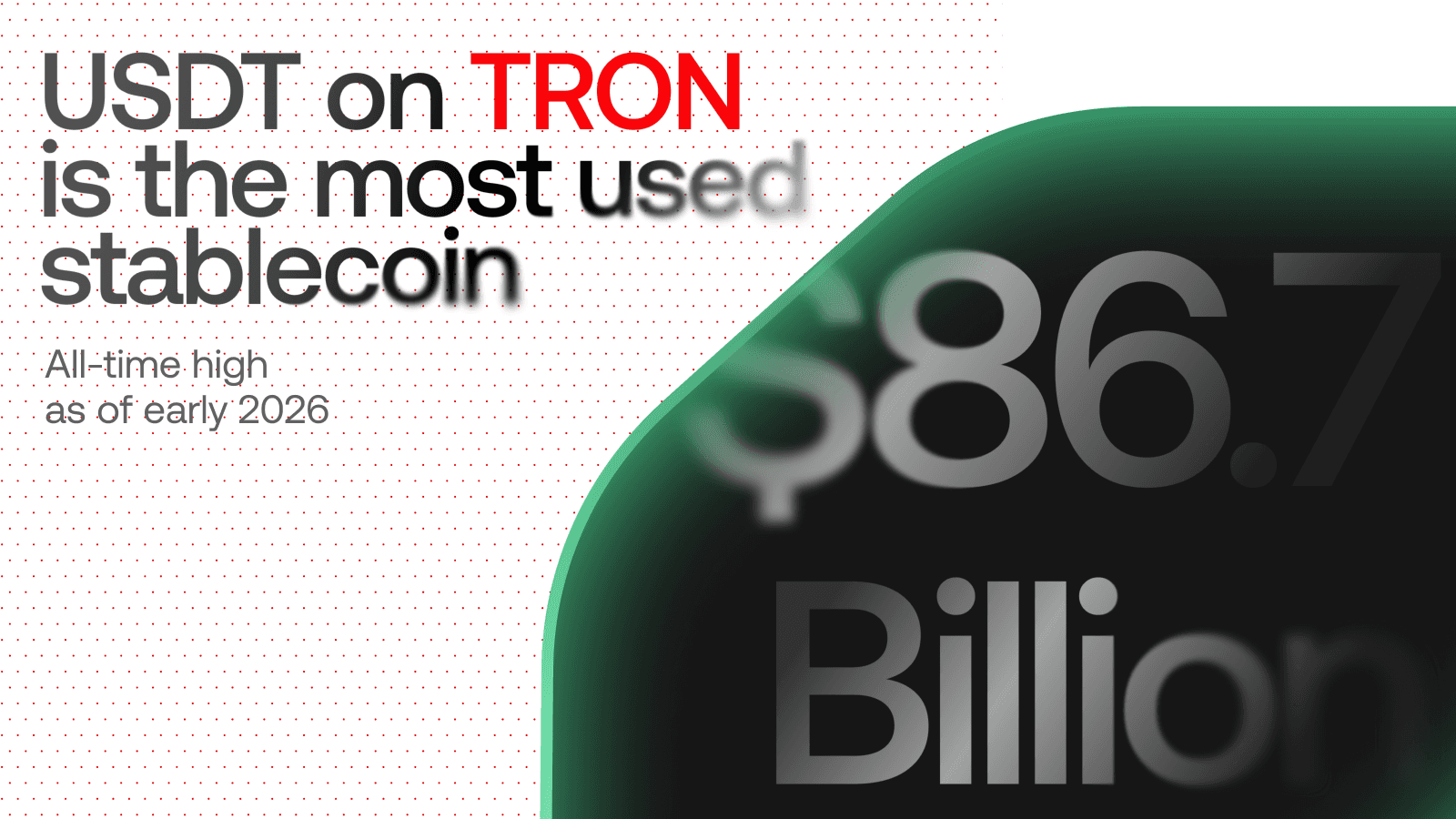
USDT on TRON is the most used stablecoin in crypto. As of early 2026, its supply on TRON reached an all-time high of about $86.7 billion, passing Ethereum to make TRON the single largest host of USDT. It now accounts for 98.6% of all stablecoin value on the network.
With total USDT in circulation near $188 billion at an April 2026 record, TRON alone carries roughly 45% to 46% of the entire supply. It also carries more transfer volume than any single asset on Ethereum or Solana.
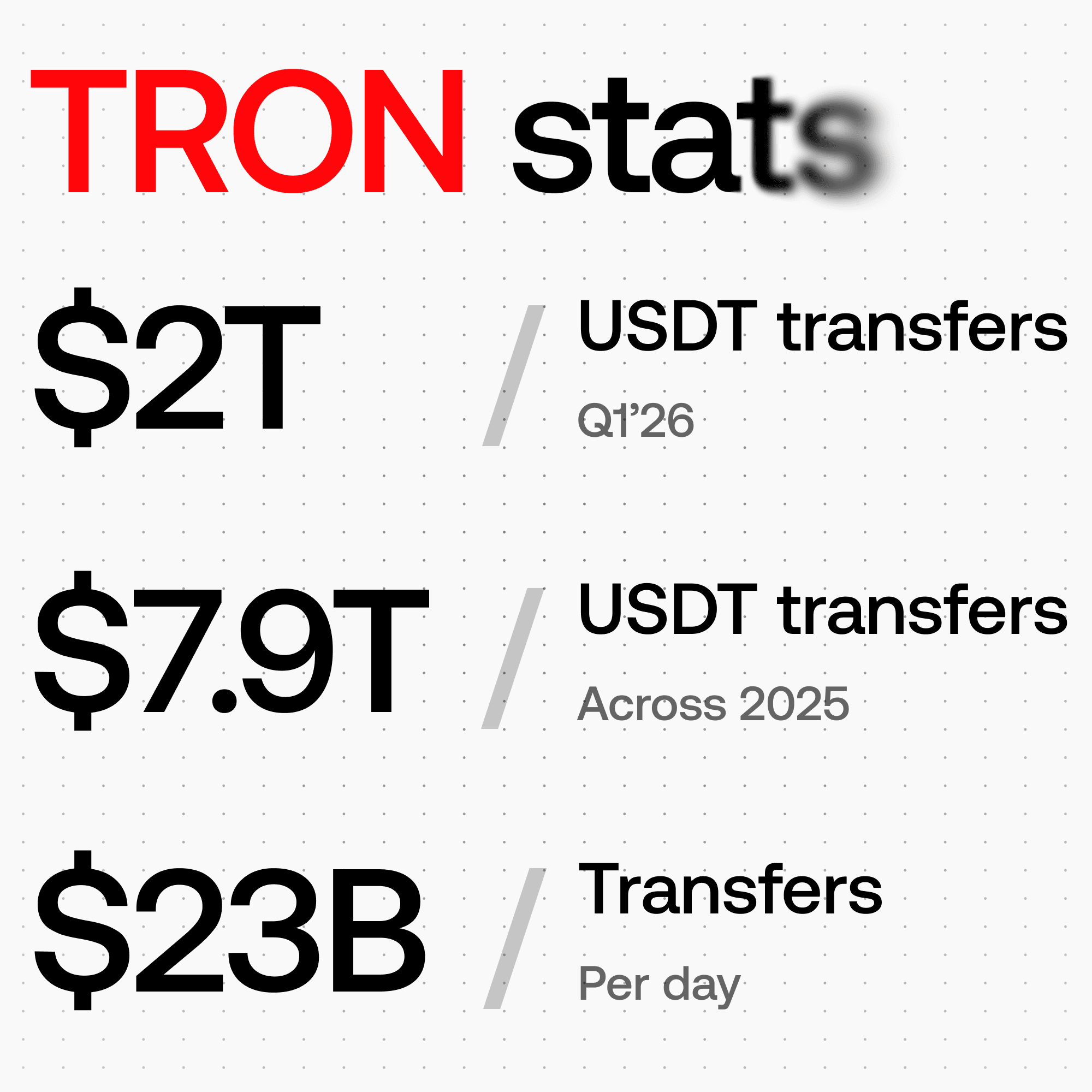
TRON settled close to $2 trillion in USDT transfers in Q1 2026 and roughly $7.9 trillion across 2025, moving an average of $23 billion to $24 billion per day, ahead of Ethereum's roughly $20 billion, across about 3.2 million daily active addresses. For years it has been the default settlement layer for stablecoin movement across much of the world, especially for payments and remittances in Southeast Asia and Latin America. Current supply figures and transfer volume are visible on Tether's transparency page and Tronscan.
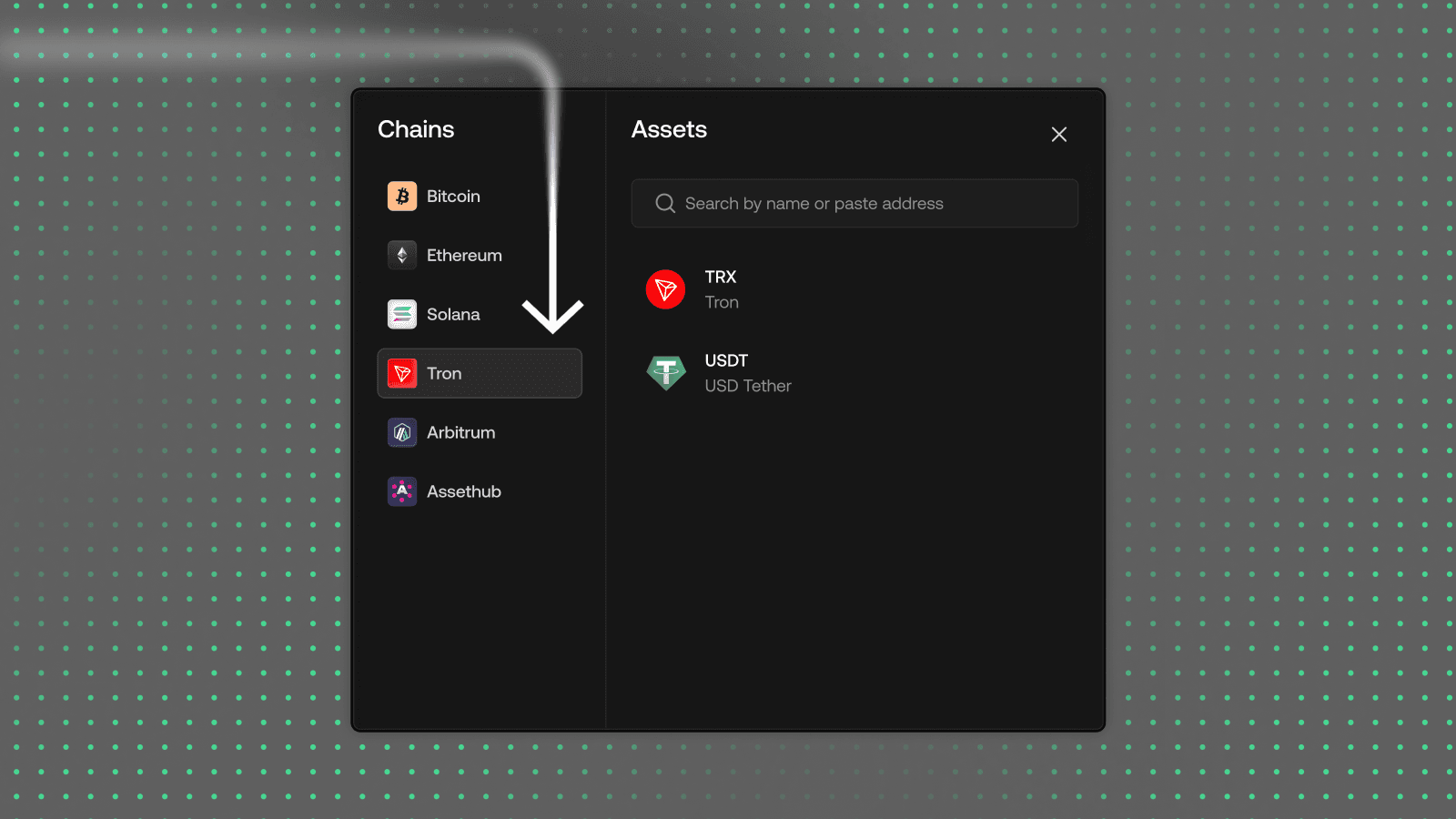
Until now, getting USDT-TRC20 in or out of TRON meant a centralized exchange or a custodial bridge and usually with KYC. That is the gap Chainflip closes. TRX and USDT-TRC20 now route through the same validator-secured swap layer that already handles native BTC, ETH, SOL, ARB, HUB and stablecoins across Ethereum, Arbitrum, Solana and Assethub.
What is live today
TRX and USDT-TRC20 are now available as both source and destination assets across Chainflip's full swap surface.
Routes now open from launch:
USDT (TRC20) ↔ BTC, ETH, SOL, FLIP, WBTC, ARB, HUB,
USDT (TRC20) ↔ USDT and USDC across ETH, SOL, ARB, HUB
TRX ↔ every supported chain and asset
Why this matters for cross-chain liquidity
TRON sits outside most cross-chain infrastructure. The chains that carry the most stablecoin volume are usually the hardest to route through without a centralized intermediary, and TRON has been the clearest example of that.
For high-volume swappers, this opens a path that previously did not widely exist outside CEX rails. For USDT holders on TRON, it removes the custodial step from any move into the rest of crypto. For integrators building swap flows for users in regions where USDT-TRC20 is the default stablecoin, it adds a route that did not exist through any other decentralized protocol at meaningful size.
This is the first new chain integration of the year as part of the Chainflip v2.2 upgrade, and the first major addition to Chainflip's route map since the v2.1 upgrade.
Testnet phase & documentation
TRON went through a longer Perseverance Testnet phase than any previous integration. Standard swaps, vault swaps, deposit and outbound behaviour, fee handling, SDK flows, and LP and node operator edge cases were tested over weeks rather than days before mainnet.
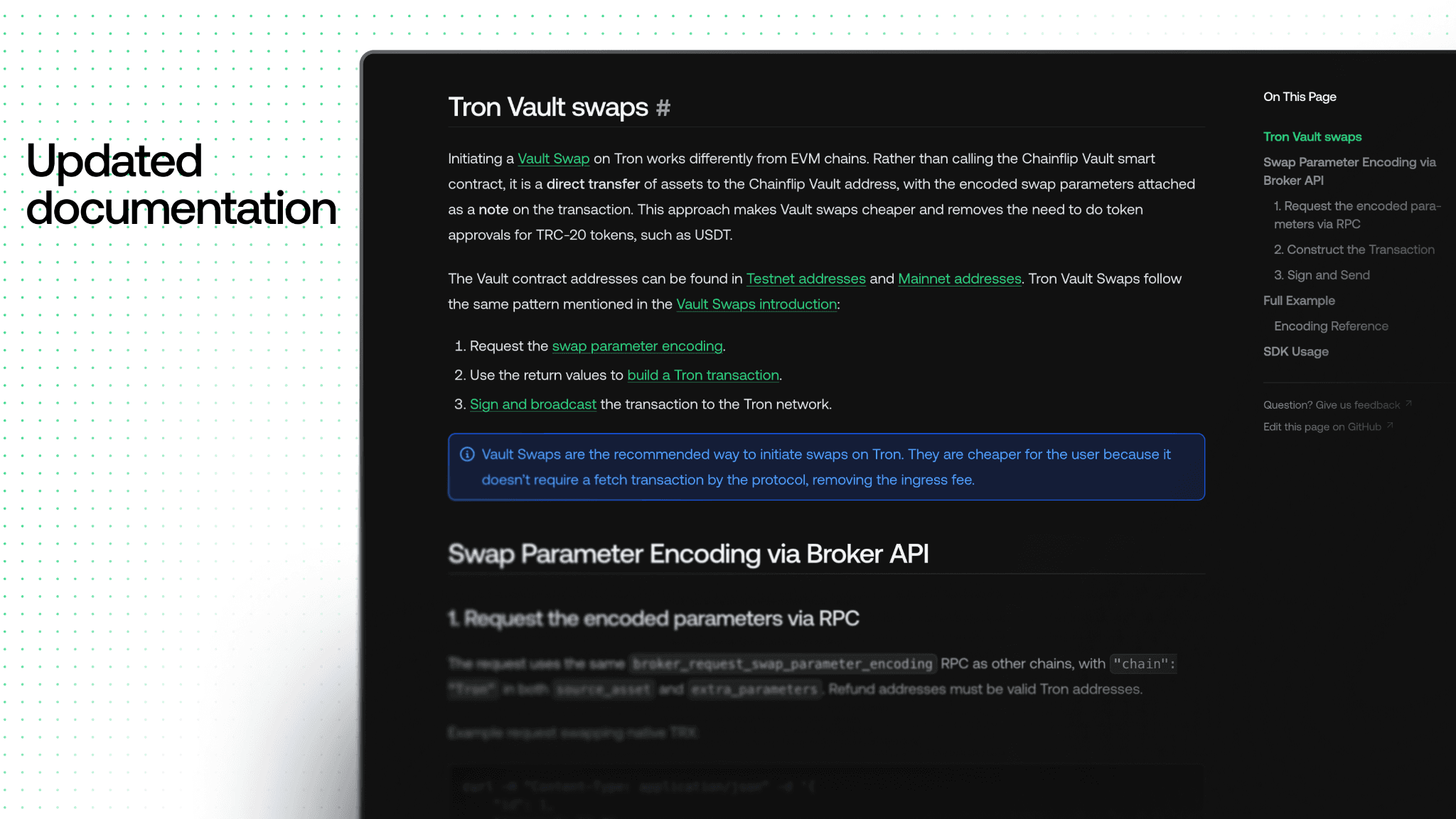
That phase also produced clearer documentation for integrators and liquidity providers, and more practical notes for node operators running TRON support in production.
Swap TRON with Chainflip
The world's most used stablecoin, now connected natively.
TRX and USDT-TRC20 swaps are live now at swap.chainflip.io.
Resources
Swap Now - Start swapping native assets
Lending - Borrow against native Bitcoin
Blog - Product updates and announcements
Chainflip Scan - Track swaps and network activity
Website - Explore Chainflip
Earn with Chainflip:
Boost - Earn fees by providing single-sided liquidity with no IL risk
Stablecoin Strategies - Deposit stablecoins and earn optimized yields
Provide Liquidity - Supply assets to Chainflip's liquidity pools
Stake FLIP - Delegate FLIP and earn staking rewards
Find us:
FAQ
What assets are live on Chainflip with the TRON integration? TRX and USDT-TRC20 are live as both source and destination assets. They can be swapped to and from native BTC, ETH, SOL, ARB, HUB as well as USDT and USDC on Ethereum, Solana, Arbitrum and AssetHub.
Are the swaps native on both sides? Yes. USDT-TRC20 in means USDT-TRC20 out. BTC in means native BTC out. No wrapped tokens, no representation layer, and no centralized intermediary holding funds during the swap.
How is this different from using a bridge or a CEX to get USDT off TRON? A custodial bridge or centralized exchange has to hold your funds at some point in the process and exposes you to custody risk, KYC requirements, or withdrawal limits. Chainflip routes the swap through a validator-secured protocol with no centralized custodian or KYC in the path.
Can I provide liquidity for TRX or USDT-TRC20? Yes. Liquidity providers can supply TRX and USDT-TRC20 through the standard LP interface. The LP onboarding flow is the same as for any other asset on Chainflip.