This is the next major step toward bringing native TRX and USDT-TRC20 swaps to Chainflip, and the first new network integration of the year.
Before TRON goes live on mainnet, we are taking a more deliberate approach to testing.
Perseverance Testnet will be used to run TRON through a much longer and more detailed testing phase than previous integrations. The aim is to make sure the chain is properly tested before users, integrators, liquidity providers, and node operators rely on it in production.
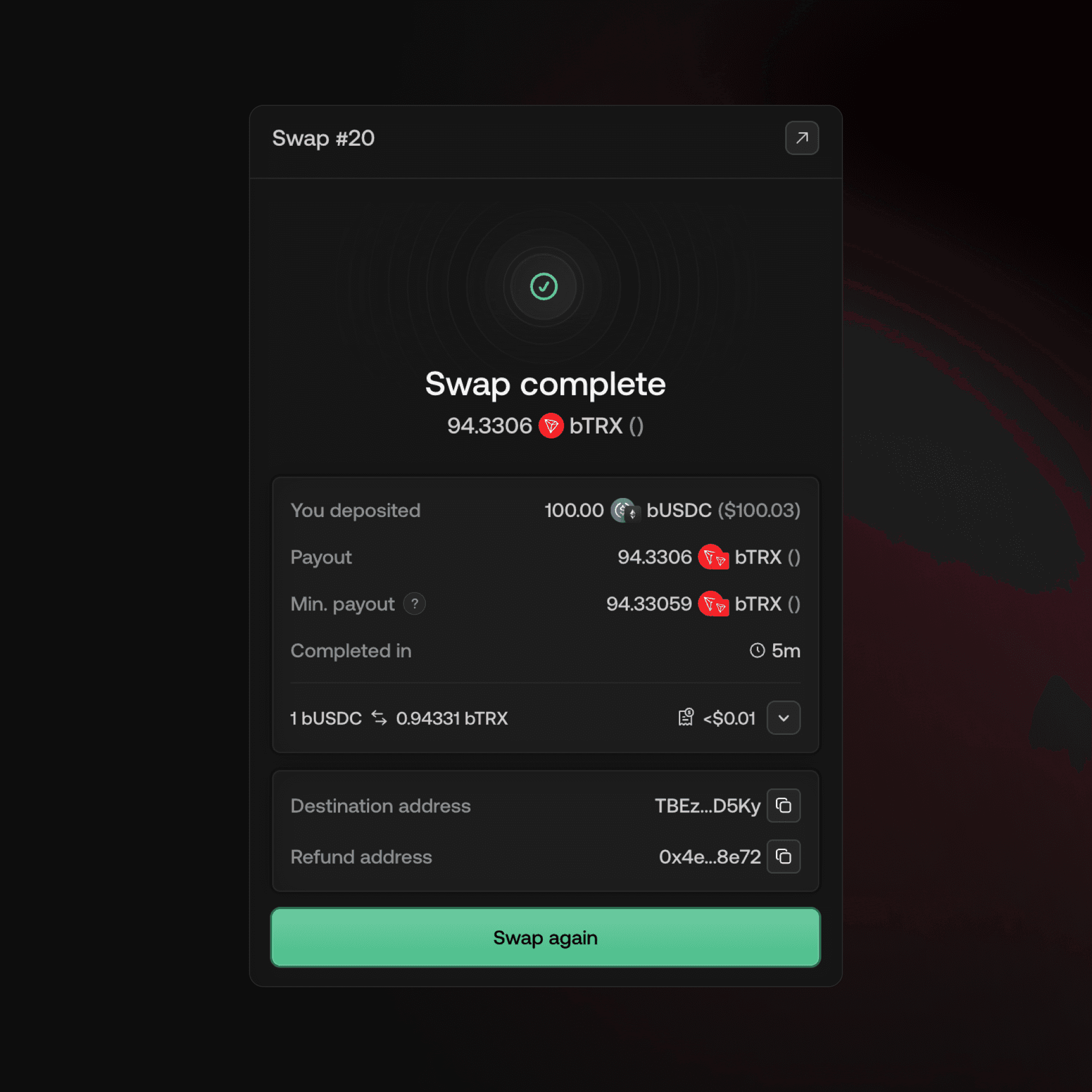
A more rigorous approach to testnet
In the past, our testnet has usually been treated as a stepping stone toward mainnet. This time, we are doing things differently.
TRON is a more complex integration, and we want to use the testnet period properly. That means running more swaps, testing more edge cases, and gathering more practical information before moving toward mainnet.
We will be testing standard swaps, different route combinations, and more advanced swap flows such as vault swaps. We will also be looking closely at how TRON behaves across different conditions, including deposit handling, outbound execution, transaction timing, fees, and any operational edge cases that come up along the way.
The goal is to move slowly enough to catch issues early, understand the integration properly, and make the eventual mainnet rollout smoother for everyone involved.
What we will be testing
During the Perseverance Testnet phase, we will be running a wide range of swaps across TRON assets and Chainflip’s existing supported routes. This includes TRX and USDT-TRC20 swaps into and out of assets like BTC, ETH, SOL, USDC, and more.
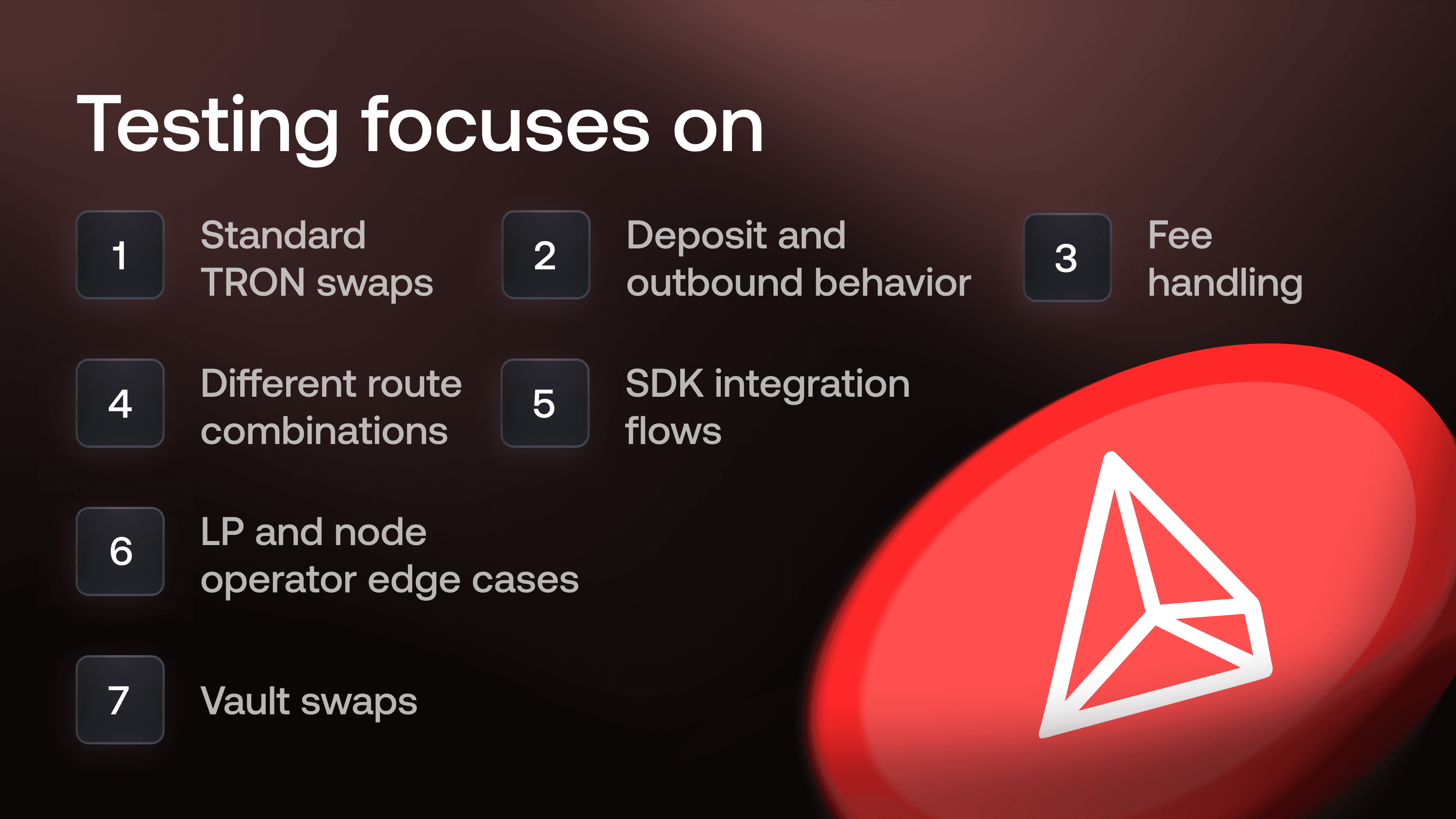
The testing will focus on:
Standard TRON swaps
Different route combinations
Vault swaps
Deposit and outbound behavior
Fee handling
SDK integration flows
LP and node operator edge cases
This testnet phase is not just about checking that swaps work. It is also about understanding the chain well enough to support it properly once it reaches mainnet.
Improving docs along the way
One of the main reasons we are running TRON on Perseverance Testnet for longer is to improve the information we give to the ecosystem. As we test more routes and edge cases, we will use what we learn to improve the Chainflip docs.
For integrators, this means clearer guidance for adding TRON routes through the Chainflip SDK.
For liquidity providers, it means better information on how to prepare for TRON markets and support the new routes effectively.
For node operators, it means more practical notes around what to expect when TRON support moves closer to mainnet.
Instead of rushing through testnet and filling in the gaps later, we want to use this period to collect useful information, document best practices, and make the mainnet rollout easier to support.
What TRON adds to Chainflip
TRON is already one of the most active networks for USDT transfers, and bringing it to Chainflip opens up a major new routing opportunity. Once live on mainnet, users will be able to swap native TRX and USDT-TRC20 through Chainflip's existing cross-chain routes alongside Bitcoin, Ethereum, Solana, Arbitrum, and stablecoins.
TRON routing remains largely untapped in the wider cross-chain market, which means more native swap options for users, more routes for integrators, and more volume opportunities for liquidity providers and the protocol.
Follow the testnet journey
If you want to test it yourself:
1. Grab your testnet TRX from the faucet here
2. Start swapping on the Perseverance testnet
We will be documenting more of the process this time around. As TRON moves through Perseverance Testnet, we will share more updates on what is being tested, what we are learning, and what comes next. This should give the community, integrators, LPs, and node operators a clearer view into how a new Chainflip network integration moves from testnet to mainnet.
Stay tuned for more updates as we move closer to mainnet.
Resources
Swap Now - Start swapping native assets
Lend BTC - Borrow against native Bitcoin
Blog - Product updates and announcements
Chainflip Scan - Track swaps and network activity
Website - Explore Chainflip
Other Chainflip Products:
Boost - Earn fees by providing single-sided liquidity with no IL risk
Stablecoin Strategies - Deposit stablecoins and earn optimized yields
Provide Liquidity - Supply assets to Chainflip's liquidity pools
Stake FLIP - Delegate FLIP and earn staking rewards
Find us: