

Borrow Against your
Native, Unwrapped Bitcoin

Lend and borrow BTC, ETH, SOL, and more. Built directly
on Chainflip’s proven DEX infrastructure.

For more information on lending launch, you can read our blog post covering the details.

Borrow Against your
Native, Unwrapped Bitcoin

Lend and borrow BTC, ETH, SOL, and more. Built directly
on Chainflip’s proven DEX infrastructure.

For more information on lending, read our blog post covering the details.

Borrow Against
your Native, Unwrapped
Bitcoin

Lend and borrow BTC, ETH, SOL, and more. Built directly on Chainflip’s proven DEX infrastructure.

For more information on lending launch, you can read our blog post covering the details.

What makes Chainflip Lending different

What makes Chainflip Lending different

What makes Chainflip Lending different

Until now, BTC lending has relied on wrapped assets and permissioned infrastructure. That approach limits transparency, introduces synthetic risk, and makes true permissionless lending impossible.

Until now, BTC lending has relied on wrapped assets and permissioned infrastructure. That approach limits transparency, introduces synthetic risk, and makes true permissionless lending impossible.

Native Assets Only

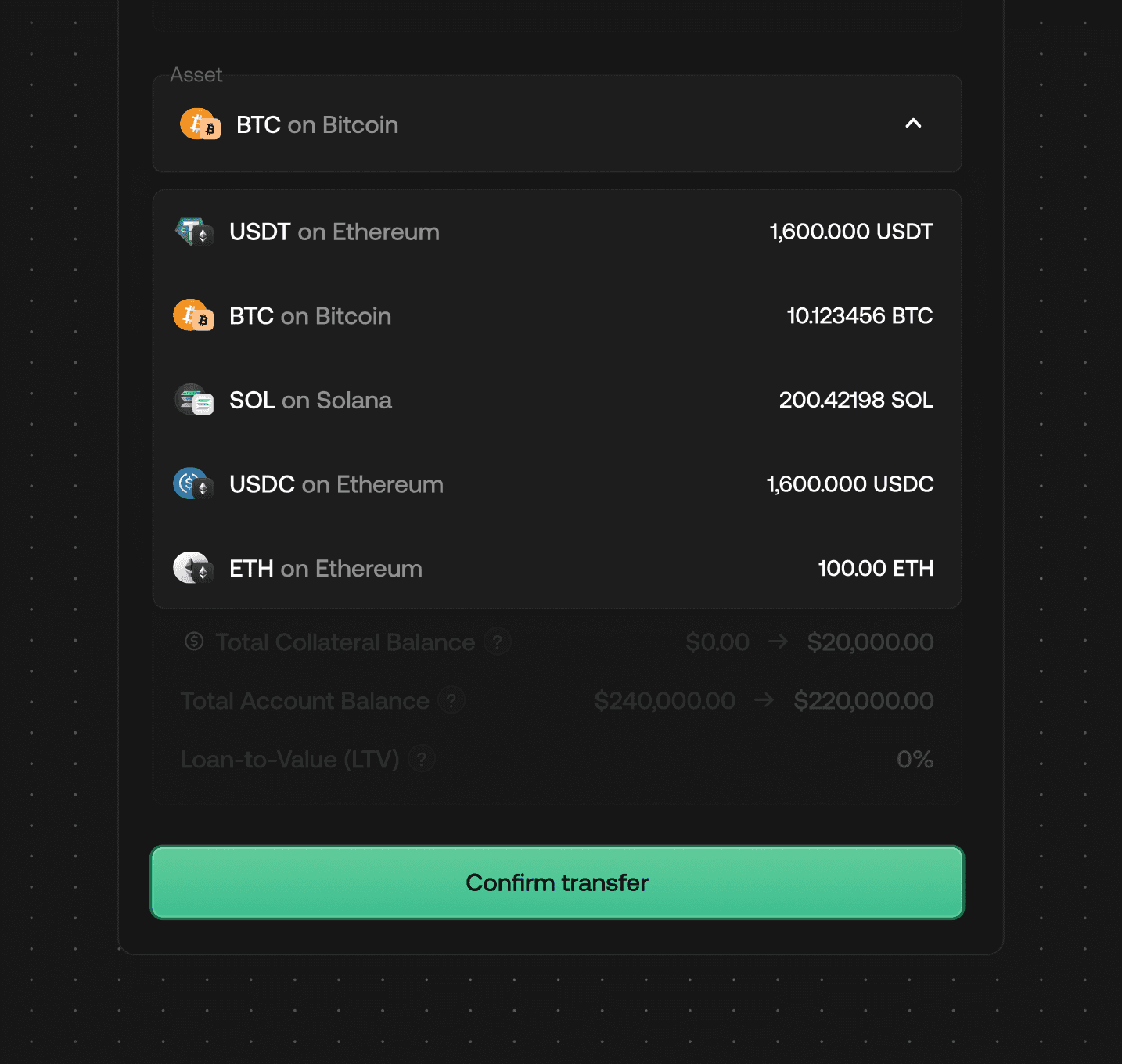
Lend or borrow real BTC, ETH, SOL, and stablecoins directly. No wrapped tokens or bridges, just native assets, managed
by Chainflip’s vault system.

Lend or borrow real BTC, ETH, SOL, and stablecoins directly. No wrapped tokens
or bridges, just native assets, managed
by Chainflip’s vault system.

Lend or borrow real BTC, ETH, SOL, and stablecoins directly. No wrapped tokens
or bridges, just native assets, managed
by Chainflip’s vault system.

Safe by Design

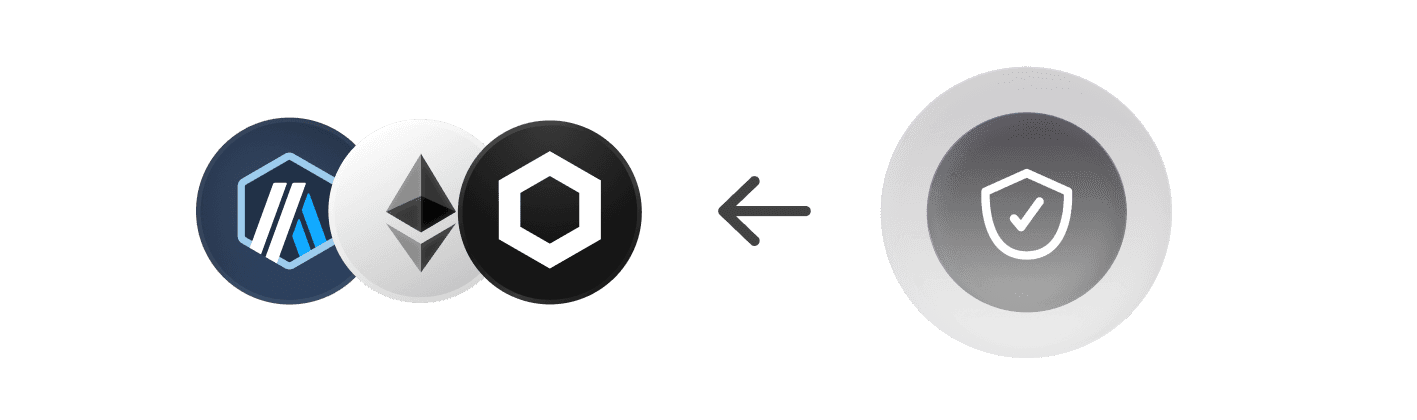
Every loan is overcollateralised and priced using verified Chainlink oracles, with fallback feeds on Ethereum
and Arbitrum for extra reliability.

Every loan is overcollateralised and
priced using verified Chainlink oracles,
with fallback feeds on Ethereum
and Arbitrum for extra reliability.

Every loan is overcollateralised and
priced using verified Chainlink oracles, with fallback feeds on Ethereum
and Arbitrum for extra reliability.

Cross-Chain by Default

Deposit collateral on one chain and borrow on another, all natively. Chainflip’s cross-chain settlement layer handles everything on-chain, removing friction between ecosystems.
Transparent & Composable


All positions, rates, and liquidations are avaliable for the user. Developers can integrate lending flows, monitoring, or liquidation data directly through our open API stack.

All positions, rates, and liquidations are visible and auditable on-chain. Developers can integrate lending flows, monitoring,
or liquidation data directly through our
open API stack.

All positions, rates, and liquidations
are visible and auditable on-chain. Developers can integrate lending flows, monitoring, or liquidation data directly through our open API stack.

For borrowers and lenders alike

For borrowers and lenders alike

For borrowers and lenders alike

Borrowers

Cross-chain flexibility

Use collateral from one chain to borrow on another. All positions and repayments settle through Chainflip’s cross-chain DEX infrastructure.

Borrowers

Access liquidity without leaving Bitcoin

Borrow stablecoins or other assets directly against your BTC, ETH, or SOL, without wrapping, bridges,
or custodians.

Borrowers

Access liquidity without
leaving Bitcoin

Borrow stablecoins or other assets directly against your BTC, ETH, or SOL, without wrapping, bridges, or custodians.

Lenders

Secure by infrastructure

Funds are held in Chainflip’s MPC vaults and
safeguarded by a 150-validator proof-of-stake network.

Lenders

Earn from real on-chain activity

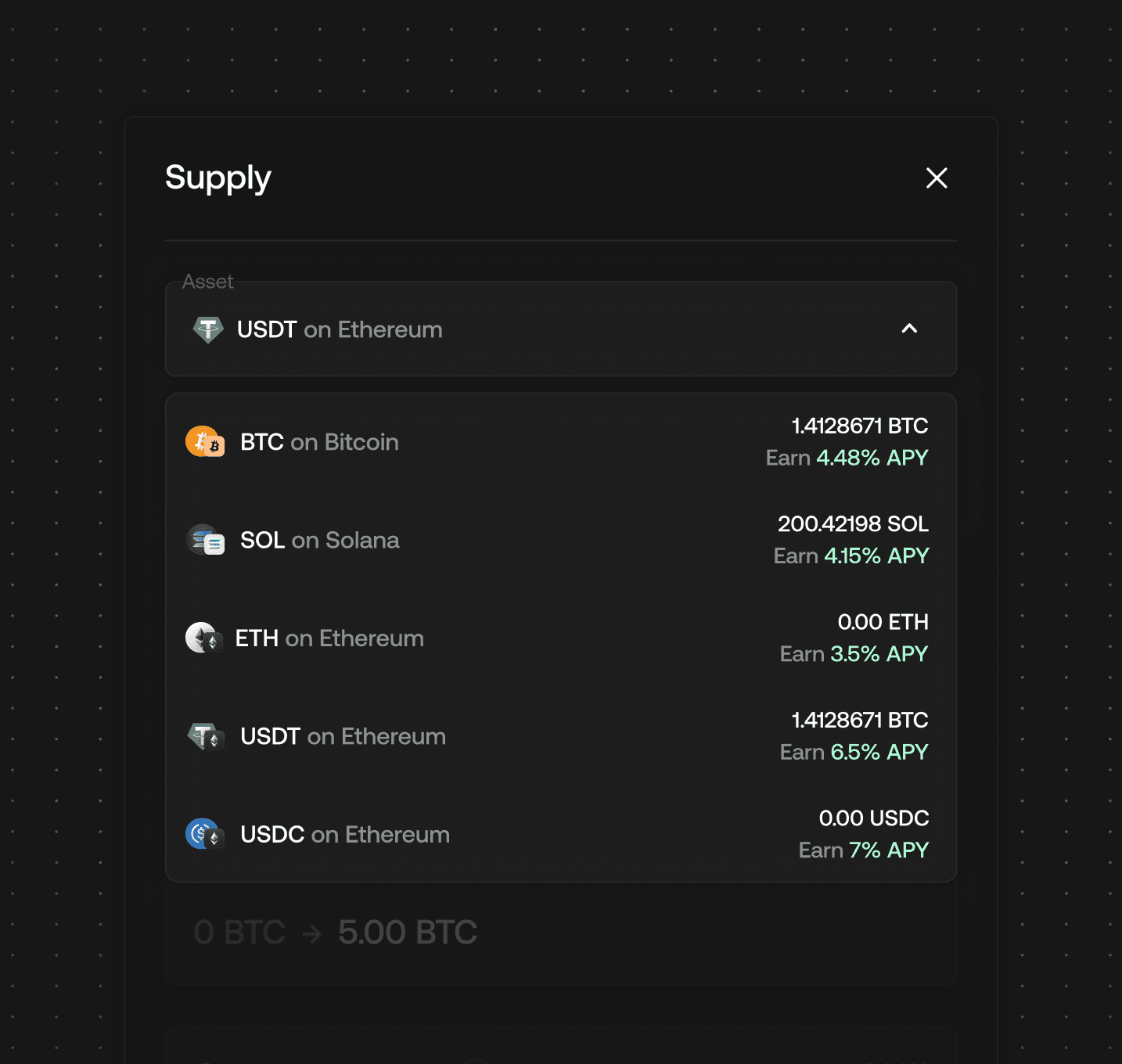
Supply USDC, USDT, BTC and more
to earn competitive yield on your assets.

Lenders

Access liquidity without
leaving Bitcoin

Supply USDC, USDT, BTC and more
to earn competitive yield on your assets.

One protocol, two sides
of the same market

One protocol, two sides
of the same market

One protocol,
two sides of
the same market

Chainflip Lending combines proven cross-chain infrastructure with
on-chain credit mechanics, creating a unified liquidity layer for native assets.

Chainflip Lending combines proven
cross-chain infrastructure with
on-chain credit mechanics, creating
a unified liquidity layer for native assets.

Battle-tested through Beta

Battle-tested through Beta

Battle-tested through Beta

Chainflip Lending launched as a closed beta to stress-test the protocol by supplying liquidity, taking out loans, and helping us catch edge cases. The Beta phase wrapped up February 4th, 2026. Now live for everyone.

Chainflip Lending launched as a closed beta to stress-test the protocol by supplying liquidity, taking out loans, and helping us catch edge cases. Season 1 wrapped up February 4th, 2026. Now live for everyone.

Built on Chainflip Infrastructure

Built on Chainflip Infrastructure

Built on Chainflip Infrastructure

Chainflip Lending uses the same proven infrastructure that's processed $6B+ in cross-chain swaps. Assets are held in Chainflip Vaults using a 100-of-150 threshold signature scheme,
secured by a decentralized validator network. See docs for technical details.

Chainflip Lending launched as a closed beta to stress-test the protocol by supplying liquidity, taking out loans, and helping us catch edge cases. Season 1 wrapped up February 4th, 2026. Now live for everyone.

Supply & Borrow to Earn More

Supply & Borrow to Earn More

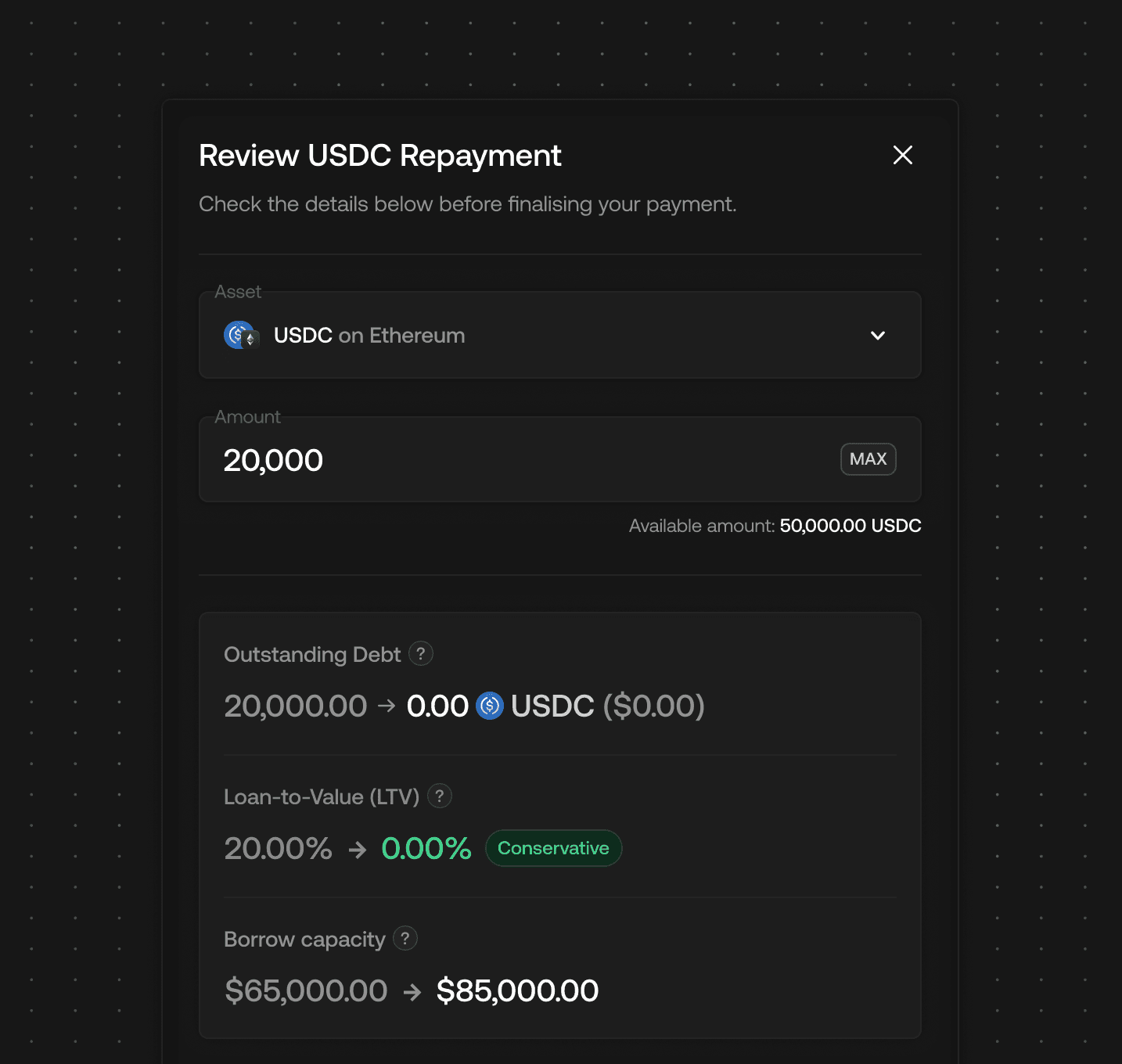
Supply liquidity to earn yield, or borrow against your assets without selling them. The protocol works because both sides need each other: suppliers provide liquidity, borrowers create demand.

Supply liquidity to earn yield, or borrow against your assets without selling them. The protocol works both ways: suppliers provide liquidity, borrowers create demand.

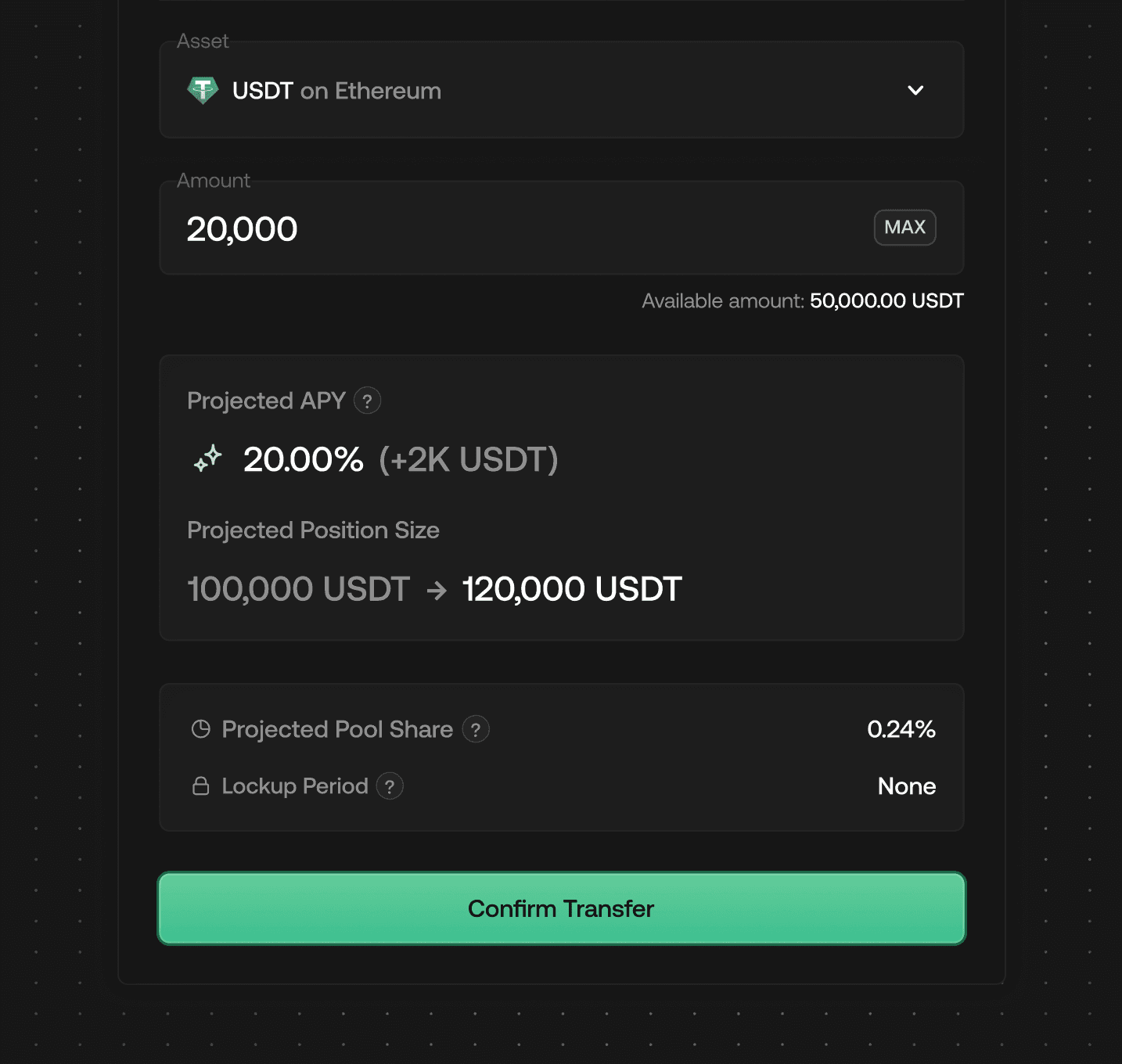
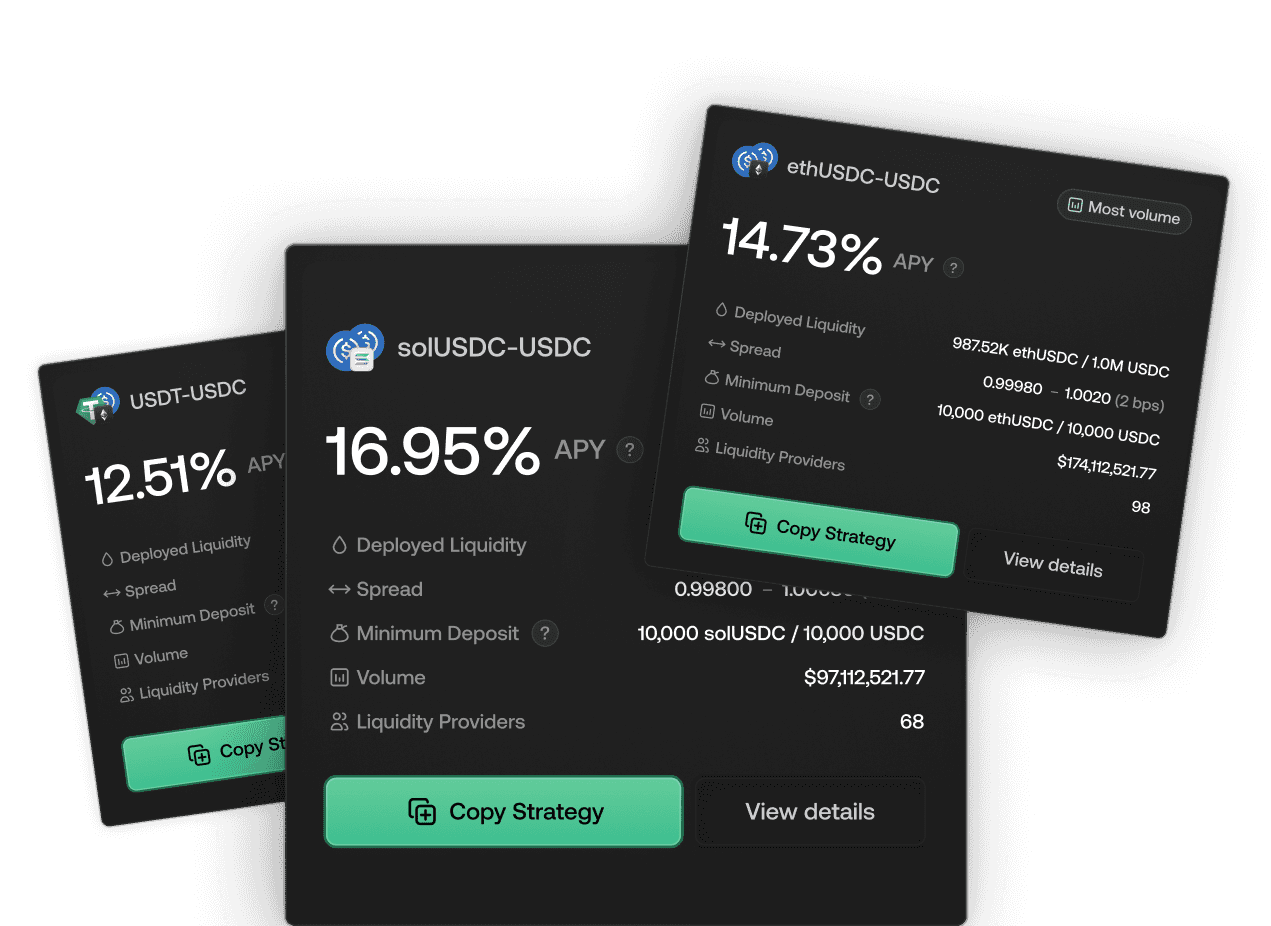
Tap into stablecoin trading strategies that generate passive income, with no need to trade or track markets yourself.

Built for Active Participants

Built for Active Participants

When borrowing goes up, suppliers earn better rates. When there's deep liquidity, borrowers have more options. The busier the protocol, the better it performs for everyone.

Deploy capital at desired spread for each stable asset. Fine-tuned to adapt with market conditions and optimise your returns.

Soft Liquidations Protect Borrowers

Soft Liquidations Protect Borrowers

Chainflip gradually unwinds risky positions instead of instant liquidations. When markets get volatile, borrowers aren't wiped out but rather their positions adjust slowly.

Built on Battle-Tested Tech
Native Assets

Built on Battle-Tested Tech

Chainflip Lending runs on the same infrastructure that powers the Chainflip DEX. The validator network and vault system have been proven under real conditions.

Your BTC stays on Bitcoin. Your ETH stays on Ethereum. No wrapped tokens, no bridges, no taxable events. Beta participants moved real volume without ever touching wBTC.

Native Assets
Built on Battle-Tested Tech

Native Assets

Your BTC stays on Bitcoin. Your ETH stays on Ethereum. No wrapped tokens, no bridges, no taxable events. Lend and borrow without ever leaving your native chain.

Chainflip Lending runs on the same infrastructure that powers the Chainflip DEX. The validator network and vault system have been proven under real conditions.

Lend Native Bitcoin.
Earn Real Yield.

Supply to earn returns. Borrow without selling. Both sides drive the same market. Your assets never leave their native chains.

For more information on lending, you can read our blog post covering the details.

Lend Native Bitcoin.
Earn Real Yield.

Supply to earn returns. Borrow without selling. Both sides drive the same market. Your assets never leave their native chains.

For more information on lending, read our blog post covering the details.

Lend Native Bitcoin. Earn Real Yield.

Supply to earn returns. Borrow without selling. Both sides drive the same market. Your assets never leave their native chains.

For more information on lending, you can read our blog post covering the details.

Frequently asked questions

Frequently asked questions

Frequently asked questions

What is Chainflip Lending?

Chainflip Lending is a native, cross-chain protocol for borrowing and lending. It lets users deposit collateral on one chain and borrow on another — entirely with native assets, without wrapping or synthetic tokens.

What is Chainflip Lending?

Chainflip Lending is a native, cross-chain protocol for borrowing and lending. It lets users deposit collateral on one chain and borrow on another — entirely with native assets, without wrapping or synthetic tokens.

What is Chainflip Lending?

Chainflip Lending is a native, cross-chain protocol for borrowing and lending. It lets users deposit collateral on one chain and borrow on another — entirely with native assets, without wrapping or synthetic tokens.

Which assets are supported?

The protocol currently supports Bitcoin, Ethereum, and Solana networks. The user can borrow USDT and USDC on Ethereum, as well as native ETH, BTC, and SOL on designated chains.

Which assets are supported?

The protocol currently supports Bitcoin, Ethereum, and Solana networks. The user can borrow USDT and USDC on Ethereum, as well as native ETH, BTC, and SOL on designated chains.

Which assets are supported?

The protocol currently supports Bitcoin, Ethereum, and Solana networks. The user can borrow USDT and USDC on Ethereum, as well as native ETH, BTC, and SOL on designated chains.

How does Chainflip Lending work?

Chainflip Lending extends the Chainflip cross-chain infrastructure with permissionless, overcollateralized lending. Users supply and borrow native BTC, ETH, SOL, and more without wrapping or bridging. Assets are held in Chainflip Vaults using a 100-of-150 threshold signature scheme. Borrowers create loan positions to borrow USDC, USDT, or other assets, and withdraw directly to any wallet. See docs for more details.

How does Chainflip Lending work?

Chainflip Lending extends the Chainflip cross-chain infrastructure with permissionless, overcollateralized lending. Users supply and borrow native BTC, ETH, SOL, and more without wrapping or bridging. Assets are held in Chainflip Vaults using a 100-of-150 threshold signature scheme. Borrowers create loan positions to borrow USDC, USDT, or other assets, and withdraw directly to any wallet. See docs for more details.

How does Chainflip Lending work?

Chainflip Lending extends the Chainflip cross-chain infrastructure with permissionless, overcollateralized lending. Users supply and borrow native BTC, ETH, SOL, and more without wrapping or bridging. Assets are held in Chainflip Vaults using a 100-of-150 threshold signature scheme. Borrowers create loan positions to borrow USDC, USDT, or other assets, and withdraw directly to any wallet. See docs for more details.

When did Season 1 end?

Season 1, that took part throughout the Lending Beta period, concluded 4th of February 2025. 

When did Season 1 end?

Season 1, that took part throughout the Lending Beta period, concluded 4th of February 2025. 

When did Season 1 end?

Season 1, that took part throughout the Lending Beta period, concluded 4th of February 2025. 

Were Season 1 participants rewarded?

Season 1 participants has been rewarded 15.000 FLIP based on total points across liquidity and action based activities. Your share of the total points = your share of the FLIP airdrop.

Were Season 1 participants rewarded?

Season 1 participants has been rewarded 15.000 FLIP based on total points across liquidity and action based activities. Your share of the total points = your share of the FLIP airdrop.

Were Season 1 participants rewarded?

Season 1 participants has been rewarded 15.000 FLIP based on total points across liquidity and action based activities. Your share of the total points = your share of the FLIP airdrop.

When is the Native BTC Lending Full Release?

4th of February 2026

When is the Native BTC Lending Full Release?

4th of February 2026

When is the Native BTC Lending Full Release?

4th of February 2026

What does over-collateralised mean?

It means you deposit more in collateral than the value of your loan. This ensures loans are safely backed, allows the protocol to recover funds through liquidations if prices drop, and keeps users and lending pools protected from insolvency.

What does over-collateralised mean?

It means you deposit more in collateral than the value of your loan. This ensures loans are safely backed, allows the protocol to recover funds through liquidations if prices drop, and keeps users and lending pools protected from insolvency.

What does over-collateralised mean?

It means you deposit more in collateral than the value of your loan. This ensures loans are safely backed, allows the protocol to recover funds through liquidations if prices drop, and keeps users and lending pools protected from insolvency.

Can I avoid being liquidated?

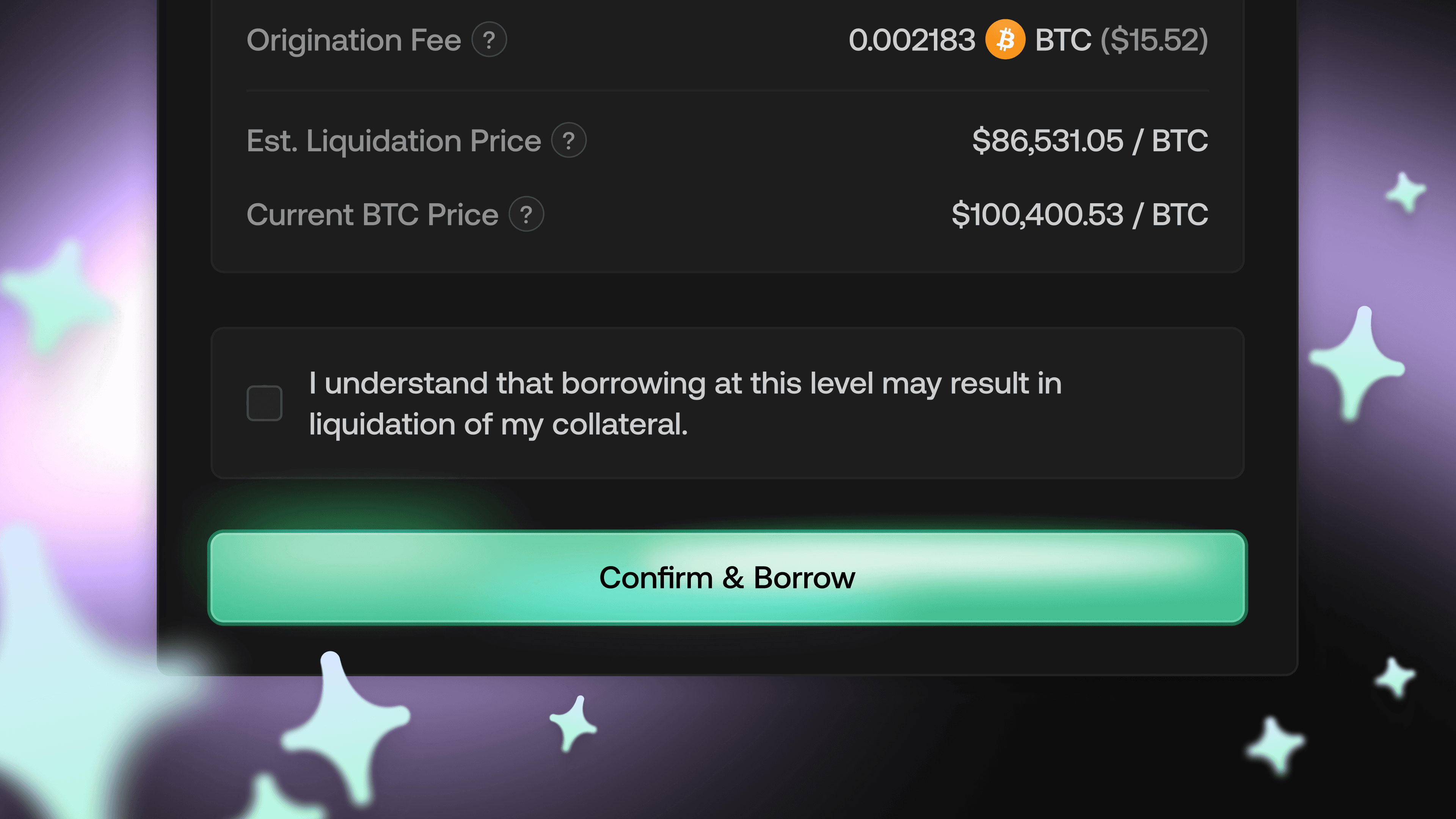
Yes. By keeping an eye on your loan-to-value (LTV) ratio and adding more collateral when markets move, you can stay safely above liquidation levels. The app shows your LTV in real time, helping you manage risk and maintain healthy positions even during volatile markets.

Can I avoid being liquidated?

Yes. By keeping an eye on your loan-to-value (LTV) ratio and adding more collateral when markets move, you can stay safely above liquidation levels. The app shows your LTV in real time, helping you manage risk and maintain healthy positions even during volatile markets.

Can I avoid being liquidated?

Yes. By keeping an eye on your loan-to-value (LTV) ratio and adding more collateral when markets move, you can stay safely above liquidation levels. The app shows your LTV in real time, helping you manage risk and maintain healthy positions even during volatile markets.

What are the associated risks?

On-chain lending carries both technical and market risks. Smart-contract or oracle failures can cause loss if exploited, while high volatility can trigger liquidations. Use the product responsibly — DeFi always involves potential loss of funds.

What are the associated risks?

On-chain lending carries both technical and market risks. Smart-contract or oracle failures can cause loss if exploited, while high volatility can trigger liquidations. Use the product responsibly — DeFi always involves potential loss of funds.

What are the associated risks?

On-chain lending carries both technical and market risks. Smart-contract or oracle failures can cause loss if exploited, while high volatility can trigger liquidations. Use the product responsibly — DeFi always involves potential loss of funds.

Will there be more seasons in the future?

We will announce future seasons once we’ve concluded Season 1. The amount of rewards, pools & their respective sides (supply/borrow) to be targeted, as well as durations of the seasons will most likely vary and will be different from Season 1 as we are fine-tuning them for a public launch scenario. Stay tuned for further announcements on this one.

Will there be more seasons in the future?

We will announce future seasons once we’ve concluded Season 1. The amount of rewards, pools & their respective sides (supply/borrow) to be targeted, as well as durations of the seasons will most likely vary and will be different from Season 1 as we are fine-tuning them for a public launch scenario. Stay tuned for further announcements on this one.

Will there be more seasons in the future?

We will announce future seasons once we’ve concluded Season 1. The amount of rewards, pools & their respective sides (supply/borrow) to be targeted, as well as durations of the seasons will most likely vary and will be different from Season 1 as we are fine-tuning them for a public launch scenario. Stay tuned for further announcements on this one.

Can I still participate?

The lending beta was closed for limited participants that applied through a form in November 2026. The full release is available to everyone.

Can I still participate?

The lending beta was closed for limited participants that applied through a form in November 2026. The full release is available to everyone.

Can I still participate?

The lending beta was closed for limited participants that applied through a form in November 2026. The full release is available to everyone.

Where can I learn more about lending?

You can find detailed information in several places:

Lending Documentation: Protocol guides, interest rates, collateral & liquidations

Bitcoin-Backed Loan Use Cases: Explore practical scenarios for using native BTC lending

Native BTC Lending Explained: Deep dive into cross-chain liquidity and native Bitcoin loans

Chainflip Lending Full Release: Read about the release to public.

Where can I learn more about lending?

You can find detailed information in several places:

Lending Documentation: Protocol guides, interest rates, collateral & liquidations

Bitcoin-Backed Loan Use Cases: Explore practical scenarios for using native BTC lending

Native BTC Lending Explained: Deep dive into cross-chain liquidity and native Bitcoin loans

Chainflip Lending Full Release: Read about the release to public.

Where can I learn more about lending?

You can find detailed information in several places:

Lending Documentation: Protocol guides, interest rates, collateral & liquidations

Bitcoin-Backed Loan Use Cases: Explore practical scenarios for using native BTC lending

Native BTC Lending Explained: Deep dive into cross-chain liquidity and native Bitcoin loans

Chainflip Lending Full Release: Read about the release to public.