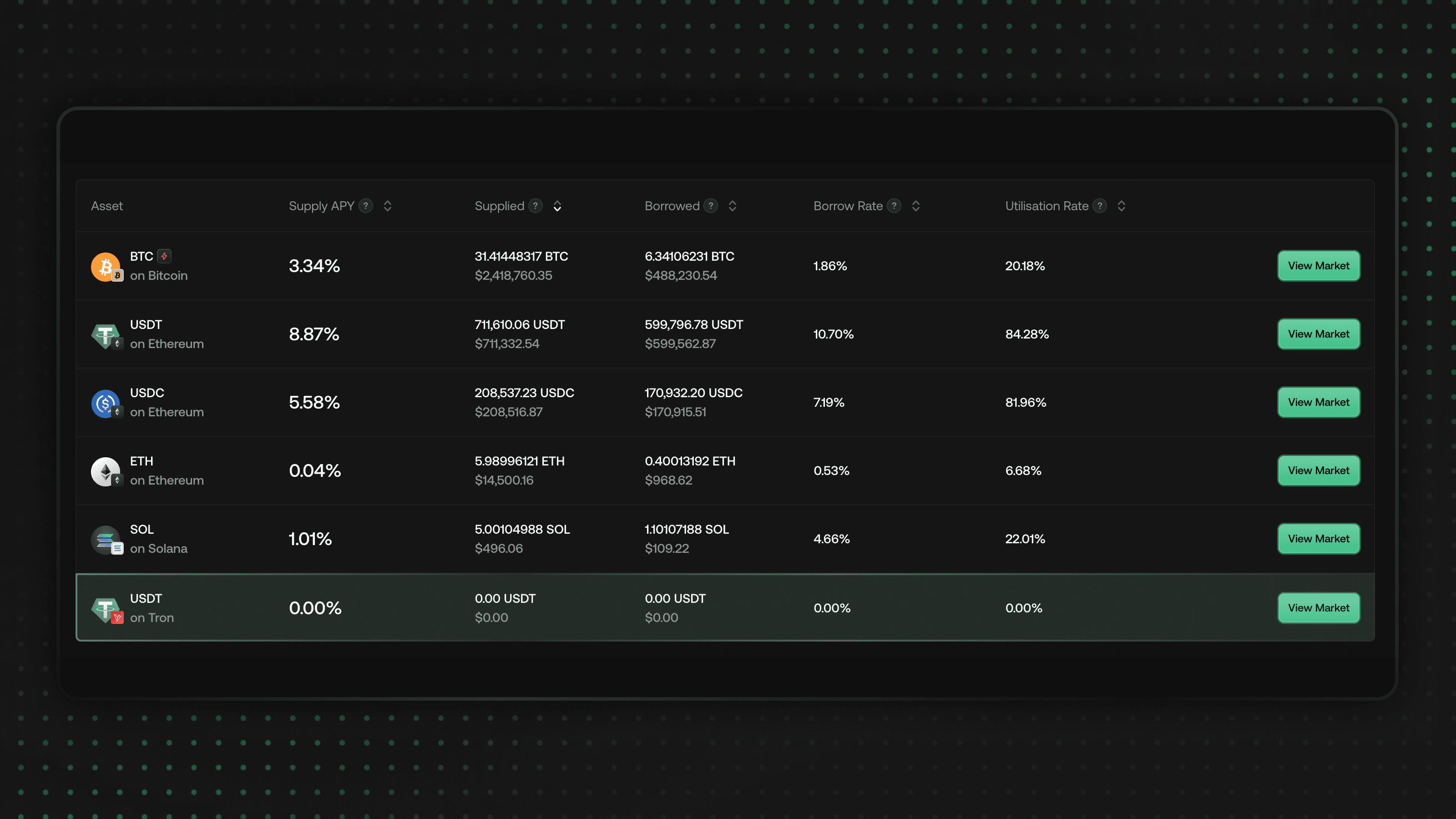
USDT-TRC20 is now live in Chainflip Lending.
It opens a door on both sides of the market: borrowers can take out native TRC20 USDT against BTC and other supported collateral, and anyone holding TRON USDT who has not been running it through our stablecoin strategies now has a second way to earn on it.
It is the first TRON-native asset in Chainflip Lending, and it lands off the back of a TRON swap route that has been one of the strongest launches Chainflip has run.
Why USDT on TRON belongs in a lending market
TRON is where a very large share of the world's USDT actually sits. The chain hosts roughly half of the total USDT supply, over $90 billion. For a lot of users, especially in Asia, Latin America, the CIS, USDT-TRC20 is not one stablecoin option among many. It is the default dollar.
That showed up immediately when Chainflip launched TRON swaps. In the first 30 days, the route processed $25.63M in cross-chain volume across 956 swaps, beating both the $8M base target and the $20M stretch goal. For comparison, Solana's first month was $8.23M across 1,651 swaps: three times the volume with 40% fewer transactions. TRON traffic is fewer, larger, more deliberate transfers, with 77% of it routed through DCA orders.
The demand is also visible on the yield side. Since TRON routes were added to Chainflip's stablecoin strategies, TRC20 routes have averaged roughly $15,000 per swap versus around $1,750 elsewhere on Chainflip.
That scale is not matched by what USDT can actually do on TRON. The network holds the largest stablecoin balance in crypto, but only around $5 billion of on-chain DeFi TVL sits against it, so the overwhelming majority of that USDT earns nothing. What DeFi exists is concentrated in the SUN ecosystem, with lending and collateral markets like JustLend making up more than 90% of TRON's TVL, and blue-chip protocols have been slow to arrive: even Aave is not yet live natively on TRON. For most holders the practical choice has been JustLend or leaving the balance idle. That is the gap Chainflip Lending steps into.
How Chainflip Lending works
Chainflip Lending is a permissionless, cross-chain lending market built on the same threshold signature vaults that settle Chainflip swaps. The important part is that it is native: you deposit the real asset, not a wrapped representation, and you can borrow on a different chain entirely.
A few mechanics worth knowing before you deposit:
Unified pools. Interest and fees generated by borrowing activity accrue to the pool and increase the value of every supplier's share over time.
Auto-compounding. There is no manual claiming. Yield compounds into your position automatically, and deposited funds start earning as soon as they land.
Utilisation-based rates. Interest rates are set dynamically by utilisation curves, so supply and demand balance without anyone setting a rate by hand. Interest accrues every 10 blocks.
Per-asset collateralisation. Collateral ratios are set per asset based on volatility, so you can pair a volatile collateral asset with a stable borrow asset.
Soft liquidation. Positions that cross the threshold start unwinding at near-market rates rather than being dumped at panic pricing. A more aggressive strategy only takes over if volatility escalates.
The practical version of that for a BTC holder: post native BTC as collateral, borrow USDT-TRC20 against it, and send it straight to a TRON address. You keep your Bitcoin exposure, you do not trigger a sale, and the dollars land on the chain where you actually want to spend them.
Supplying USDT-TRC20 for yield
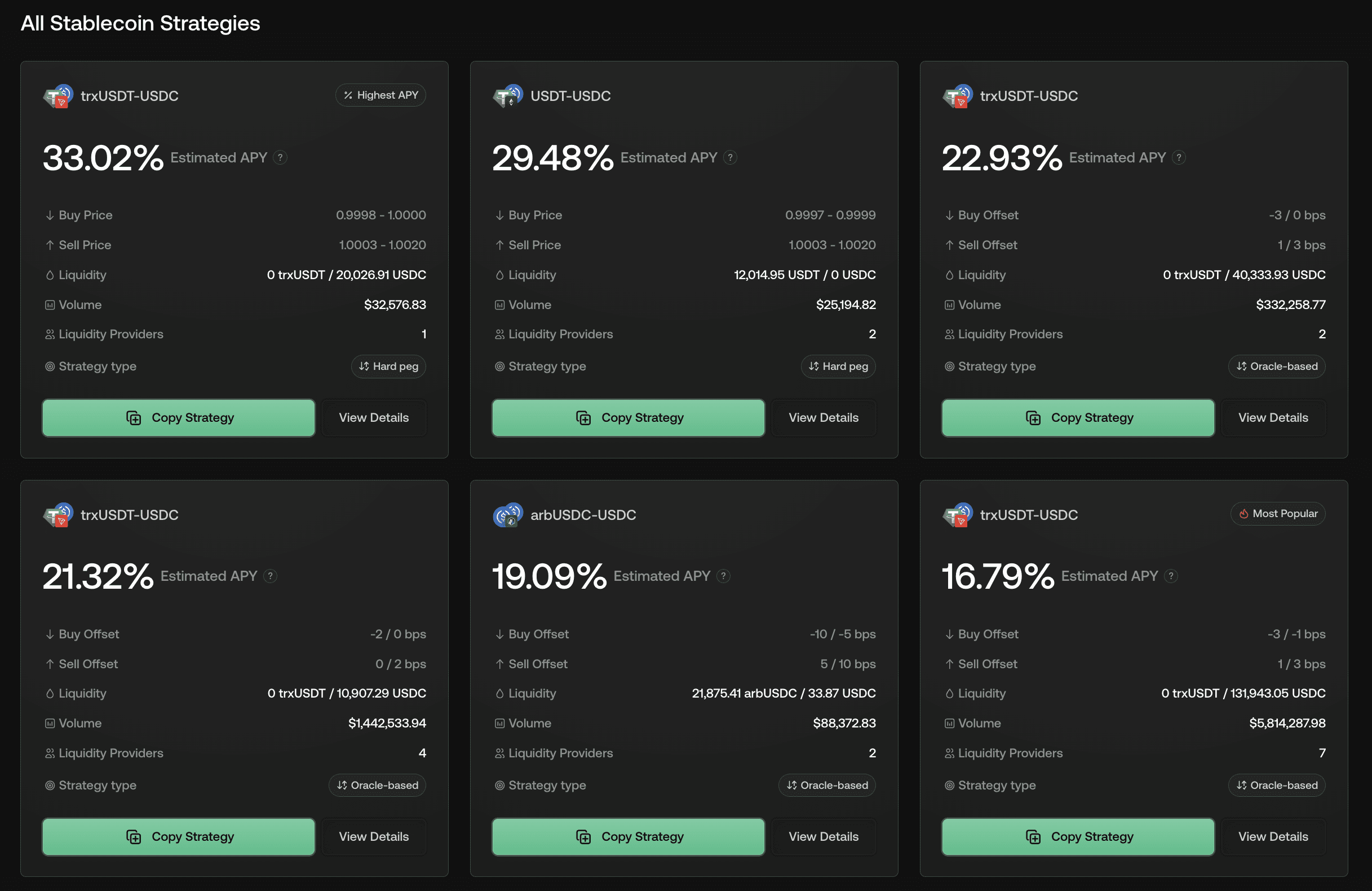
Until now, the way to earn on TRON USDT with Chainflip was through stablecoin strategies, which deploy your deposit across swap-fee and liquidity opportunities on the network. Lending is a second, separate option, and it pays from somewhere else entirely: interest from borrowers.
The borrow-side demand behind it is not theoretical. Chainflip's TRON swap data already shows heavy USDT-TRC20 outbound flow, 73% of the first month's $25.6M volume, which says people want TRC20 dollars in hand, but also spend it. Utilisation is what pays suppliers, and this is an asset with a natural borrower base.
You can run both at once: they draw on different sources of yield, so there is no reason to pick just one.
Borrowing native USDT-TRC20 against your collateral
Choosing USDT-TRC20 as your borrow asset means the loan lands directly on TRON. No bridge, no wrapped intermediary, no second step to move funds from an EVM chain to where you need them. That covers the cases people already use Bitcoin-backed loans for: covering an expense without selling BTC, funding a position elsewhere, or moving working capital to a counterparty that settles in TRC20. Borrowing against Bitcoin instead of selling it means no disposal event and no loss of upside.
Borrow TRON USDT against native BTC →
Getting started
Head to lp.chainflip.io/lending and connect an EVM wallet. This creates your LP account.
Deposit the asset you want to supply, or the collateral you want to borrow against.
Supply USDT-TRC20 to earn yield, or open a borrow position and choose USDT-TRC20 as the borrowed asset.
Track your position, rates and utilisation in the dashboard. Interest accrues automatically, so there is nothing to claim.
If you just want to move USDT between TRON and another chain rather than lending it, you can do that through swap.chainflip.io and it does not need a wallet connection at all.
Resources
Lending - Supply USDT-TRC20 or borrow against native Bitcoin
Swap - Start swapping native assets
Blog - Product updates and announcements
Chainflip Scan - Track swaps and network activity
Website - Explore Chainflip
Earn with Chainflip:
Boost - Earn fees by providing single-sided liquidity with no IL risk
Stablecoin Strategies - Deposit stablecoins and earn optimised yields
Provide Liquidity - Supply assets to Chainflip's liquidity pools
Stake FLIP - Delegate FLIP and earn staking rewards
Find us:
FAQ
Can I supply USDT-TRC20 and borrow a different asset?
Yes. Supply and borrow are separate positions. You can supply USDT-TRC20 for yield, and separately post collateral to borrow BTC, ETH, SOL, USDC or USDT.
Do I need a TRON wallet to use this?
You need a TRON address to receive USDT-TRC20 when you borrow or withdraw. The lending interface itself is accessed with an EVM wallet.
Is this bridged or wrapped USDT?
Neither. Chainflip settles natively through its threshold signature vaults. The USDT you supply and borrow is real TRC20 USDT on TRON.
What determines the APY?
Pool utilisation. Rates move with how much of the supplied USDT-TRC20 is currently borrowed, updating as interest accrues every 10 blocks. Live rates are on lp.chainflip.io/lending.
How is this different from the stablecoin strategies product?
Strategies deploy stablecoins across swap-fee and liquidity opportunities on the Chainflip network. Lending pays you interest from borrowers. They are separate products and you can use both.
What happens if my collateral drops in value?
Positions that fall below their threshold are unwound gradually through soft liquidation at near-market rates, escalating only if volatility demands it. Collateral ratios are set per asset based on volatility.