Chainflip has reached a meaningful supply milestone.
The total amount of FLIP burned through protocol activity has now passed the total amount emitted since launch.
Emissions have always been part of Chainflip's design. They help bootstrap the protocol, reward validators, and support network security as usage grows.
In the early days that role mattered most. Chainflip was still building liquidity, adding integrations, improving pricing, and proving there was real demand for native cross-chain swaps. At that stage, protocol revenue was too early to offset emissions in any meaningful way.
The picture looks different today.
Swap activity now generates enough protocol revenue to offset every FLIP emitted since TGE, and then some. Through the buy-and-burn mechanism, that revenue has removed around 11.5M FLIP from supply. Total supply now sits back around the level it started with at launch, while the protocol itself is significantly further along.
Back to the Original Supply Level
At TGE, FLIP launched with a total supply of 90,000,000.
Since then, the protocol has emitted around 11.5M FLIP through validator rewards and network incentives and burned around the same amount through buy-and-burns funded by protocol revenue.
The numbers now roughly cancel out. But the protocol behind them does not look the same as it did at launch.
Since TGE, Chainflip has processed $7.9B in total swap volume, completed over 830,000 swaps, integrated with major wallets and aggregators, and built a recurring base of protocol revenue that keeps growing.
The same supply base now sits underneath a much more mature protocol.
How the Burn Works
Every swap that clears through Chainflip generates protocol fees.
A portion of those fees buys FLIP from the open market, and that FLIP is permanently removed from supply. No governance vote. No treasury decision. Just the buy-and-burn running automatically in the background with every swap that settles.
This was not a treasury event or a one-off supply adjustment. It came from normal protocol activity.
Over time, that mechanism has removed enough FLIP to fully offset all emissions since TGE, and it keeps running with every swap that clears.
The important shift is that emissions are no longer telling the full supply story. Protocol revenue has grown enough to push net supply back down, and burns are now outpacing new emissions on an ongoing basis.
That crossover happened in June 2026, driven by a sustained period of around $8M in daily volume, and has held since.
You can swap through Chainflip here and contribute directly to the burn with every trade.
The Numbers
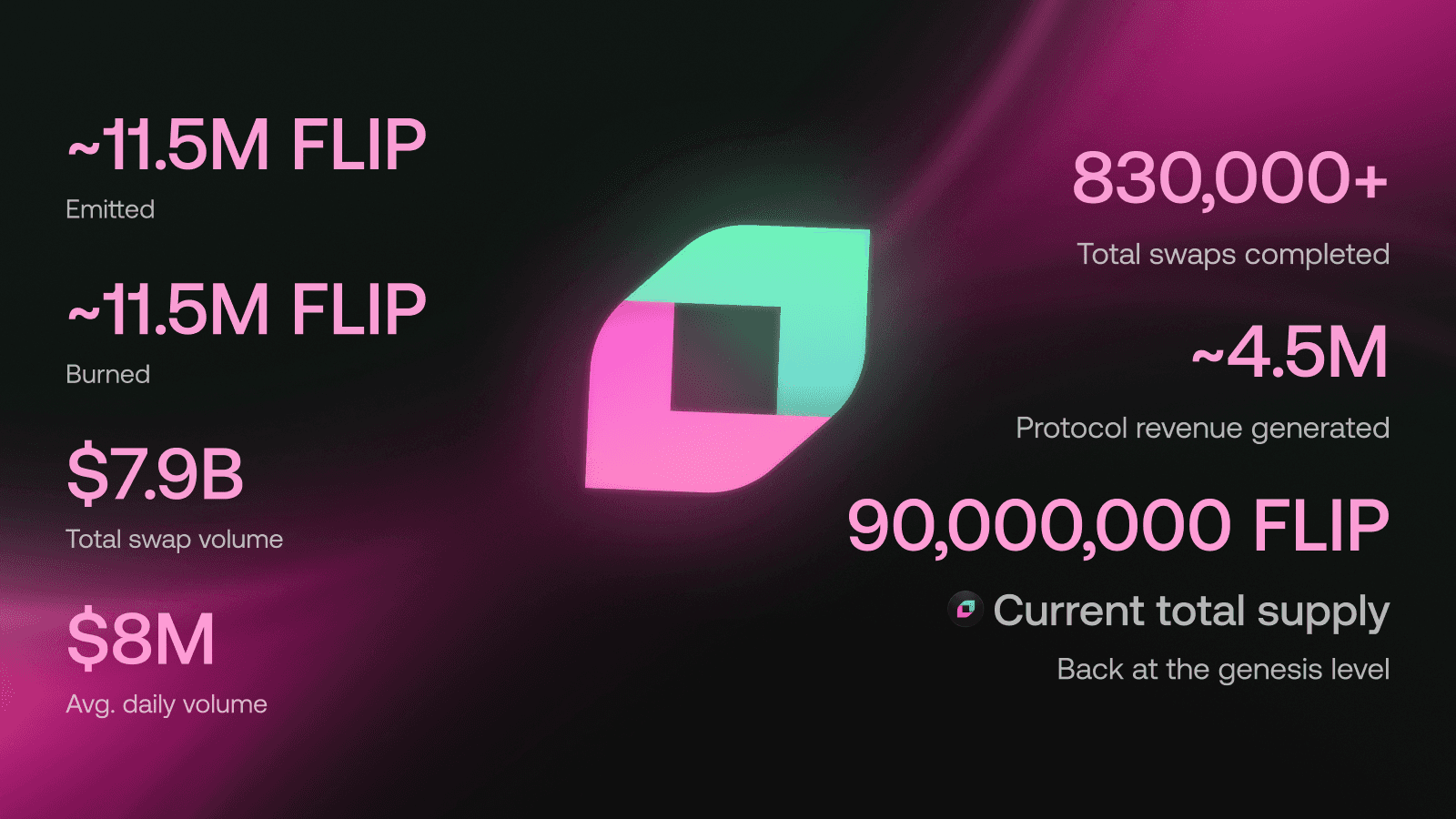
Since TGE:
~11.5M FLIP emitted
~11.5M FLIP burned
Net change back to roughly zero, with burns now fully offsetting emissions
$7.9 B total swap volume
830,000+ total swaps completed
~$4.5M protocol revenue generated
Current total supply: around 90,000,000 FLIP, back at the genesis level
Current volume: around $8M average daily volume over the last 90 days
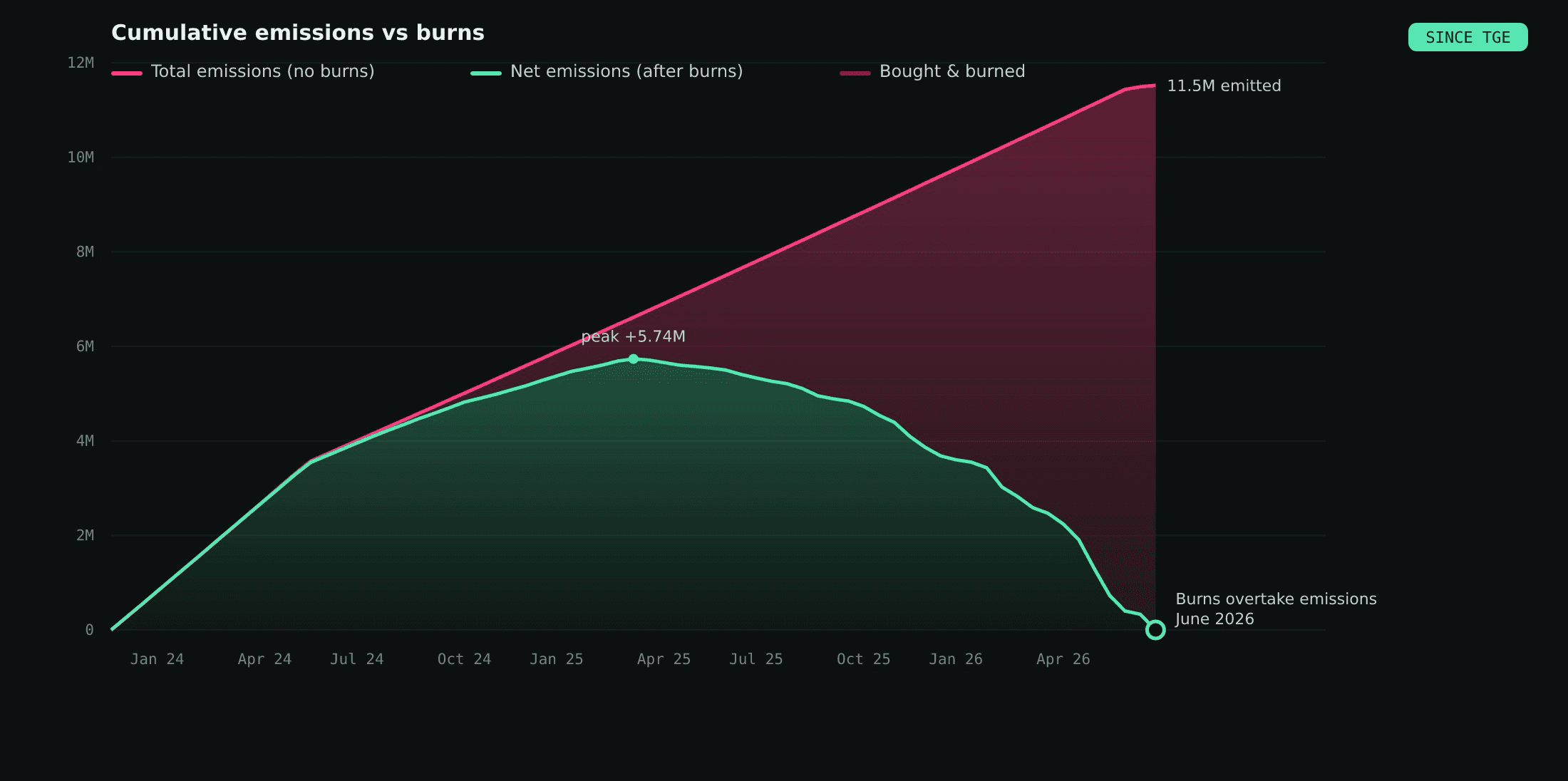
Cumulative FLIP emitted against net emissions after burns. The shaded gap is FLIP burned. Net emissions have now reached zero, meaning burns have fully offset every FLIP emitted since TGE.
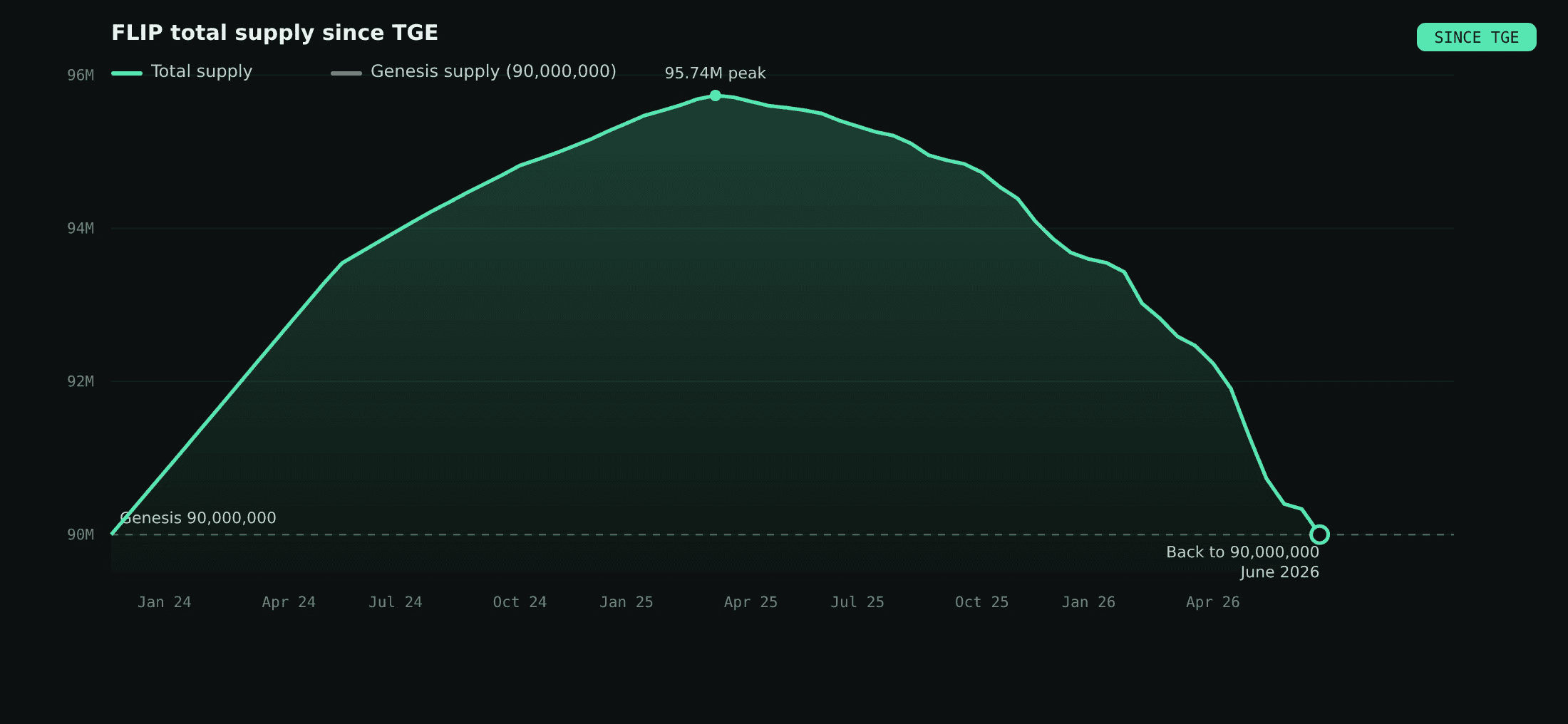
FLIP total supply since TGE. Supply rose with emissions, peaked near 95.7M, and has now returned to the 90M it launched with.
Burns Continue From Here
Reaching this milestone does not mean supply is capped here. The existing model keeps running.
As swap volume generates protocol revenue, FLIP continues to be bought and burned, which means supply can keep trending down under the current structure.
The next larger update is FLIP 2.1. We have already published a full breakdown of what the new model looks like, how validator incentives change, and what it means for the long term.
One thing worth noting ahead of FLIP 2.1 is delegation. The new model introduces revenue-backed staking, so FLIP holders will be able to earn a share of protocol revenue by delegating to validators. If you hold FLIP and want to be positioned when that goes live, you can explore delegation here.
Closing
This milestone matters because it was earned through protocol activity, not a one-time supply event.
Chainflip now has more routes, more liquidity, more integrations, more volume, and more revenue than it had when FLIP first went live. And it has roughly the same total supply it started with.
Burns continue under the current model, and FLIP 2.1 will take the same broad principle of protocol revenue flowing back into the token and place it inside a more mature long-term economic structure.
After several years of building and growing swap activity, protocol usage is now directly pushing back against supply expansion.
Resources
Swap Now - Start swapping native assets
Lend BTC - Borrow against native Bitcoin
Blog - Product updates and announcements
Chainflip Scan - Track swaps and network activity
Website - Explore Chainflip
Other Chainflip Products:
Boost - Earn fees by providing single-sided liquidity with no IL risk
Stablecoin Strategies - Deposit stablecoins and earn optimized yields
Provide Liquidity - Supply assets to Chainflip's liquidity pools
Stake FLIP - Delegate FLIP and earn staking rewards
Find us: