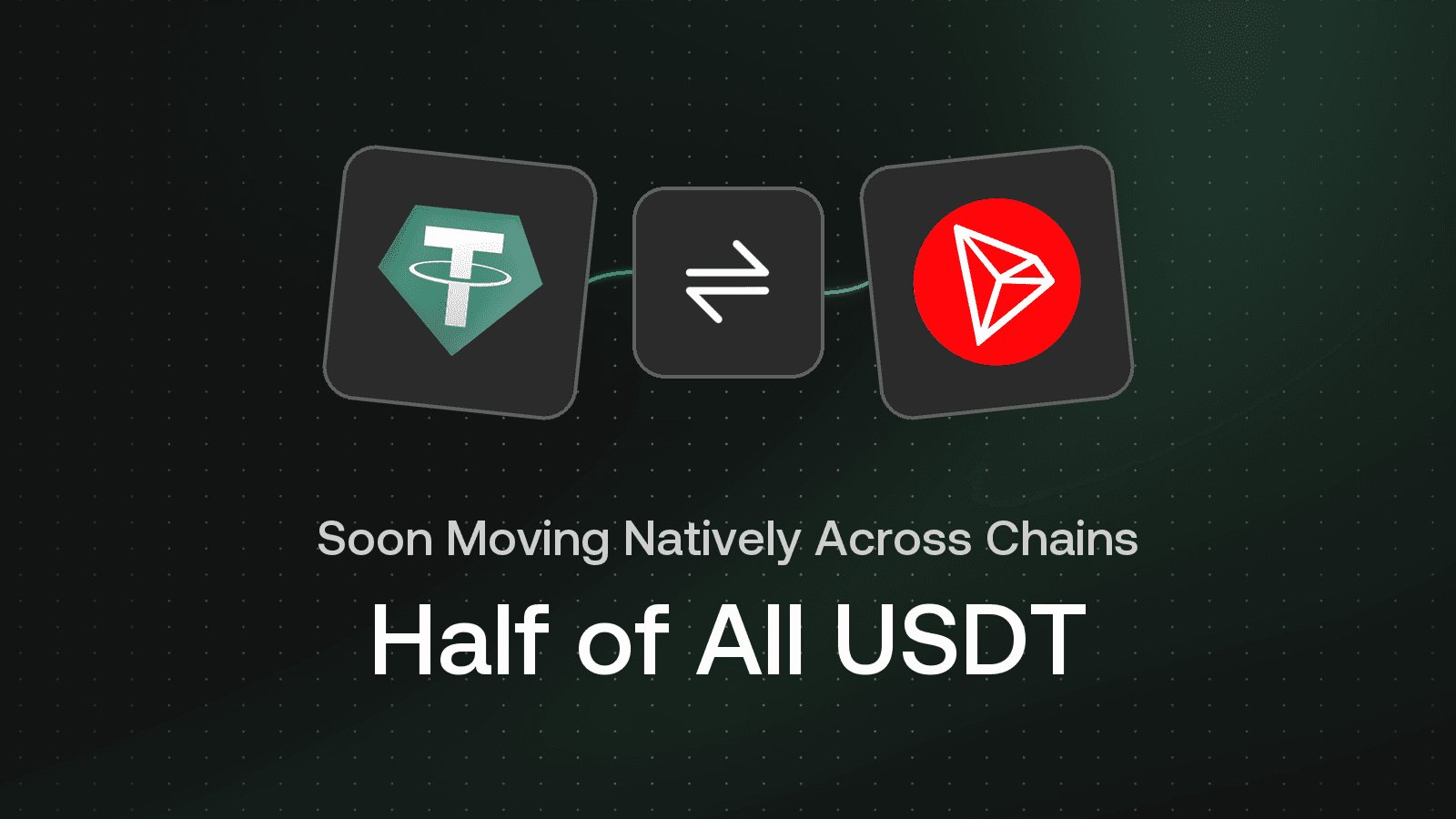
Tron holds over $80 billion in USDT. That's more than Ethereum. More than any other chain. And for the millions of users who hold stablecoins there, moving that value anywhere else remains surprisingly difficult.
The infrastructure to move stablecoins into Tron is everywhere. The infrastructure to move them out? That's a different story.
How Tron Became the Stablecoin Capital
Tron's dominance didn't happen by accident. It was built on a simple value proposition: cheap transactions and fast confirmations. While Ethereum users paid $20 or more in gas fees during congestion, Tron offered sub-cent transfers.
The numbers tell the story. Over 50% of global USDT supply now sits on Tron. More than 83% of USDT users chose the TRC-20 version over alternatives. In 2024, Tron processed $5.46 trillion in USDT transactions, a 48% increase from the previous year.
This concentration makes sense from a user perspective. If you're sending remittances, paying freelancers, or just moving money quickly, Tron's low fees are hard to beat. The problem emerges when users want to do something other than send USDT to another Tron address.
The One-Way Trip Problem
Getting stablecoins onto Tron is trivial. Centralized exchanges support TRC-20 withdrawals. Bridges exist. Payment processors route funds there automatically.
Getting stablecoins off Tron is where the friction appears. The existing options all involve some form of centralized intermediary.
The most common path runs through centralized exchanges. Users deposit their TRC-20 USDT, wait for confirmations, then withdraw on a different chain. This works, but it requires KYC verification, exposes users to custodial risk, and involves multiple steps that each take time. For users in regions with limited exchange access, it may not work at all.
Why Native Exits Don't Exist
The DeFi ecosystem that grew on Ethereum never really developed on Tron. While other chains have bridges, DEX aggregators, and cross-chain swap protocols, Tron's connectivity to the broader crypto ecosystem remains limited.
Part of this is technical. Tron uses a different virtual machine than EVM chains, making it harder for protocols to expand there. Part of it is economic. The user base on Tron skews toward payments and transfers rather than complex DeFi interactions. Builders followed the activity elsewhere.
The result is a liquidity trap. Users can easily move value into Tron's stablecoin ecosystem, but moving it out requires stepping outside the decentralized paradigm entirely. In a market where total stablecoin supply exceeds $300 billion, having a third of it effectively siloed on one chain creates real friction.
The CEX Dependency
Today, if you hold USDT on Tron and want to swap it for SOL, ETH, or native BTC, your path runs through a centralized exchange. There's no native swap route. No trustless alternative. The decentralized options that exist for other chain pairs simply don't extend to Tron.
This creates several problems. Users who prefer self-custody must temporarily give it up. Those in jurisdictions with exchange restrictions face limited options. And everyone pays the implicit costs of centralization: withdrawal delays, account verification, and the ever-present risk of frozen funds.
For a stablecoin ecosystem that processes trillions in annual volume, the exit infrastructure remains surprisingly primitive.
What Would a Native Route Look Like?
The technical requirements are clear. A native exit route for Tron stablecoins would need to support TRC-20 tokens directly, swap them through decentralized liquidity, and deliver native assets on the destination chain. No wrapped tokens. No centralized custody in the middle.
Protocols that have solved similar problems for other chains already exist. The architecture for cross-chain swaps that don't rely on bridges or custodians has been proven. The question is whether that infrastructure can extend to where the liquidity actually sits.
Tron's $80 billion in stablecoins represents real user demand. The one-way trip problem isn't a theoretical issue. It's a daily reality for millions of holders who can use their stablecoins for payments but struggle to access the broader DeFi ecosystem.
TRON Is Coming to Chainflip Mainnet
The Tron stablecoin liquidity problem won't solve itself. But work is already underway to change the equation. Testing has begun on infrastructure that could finally give Tron users a native exit path.
For $80 billion in trapped stablecoins, that's worth watching.
Resources
Swap Now - Start swapping native assets
Lend BTC - Borrow against native Bitcoin
Blog - Product updates and announcements
Chainflip Scan - Track swaps and network activity
Website - Explore Chainflip
Other Chainflip Products:
Boost - Earn fees by providing single-sided liquidity with no IL risk
Stablecoin Strategies - Deposit stablecoins and earn optimized yields
Provide Liquidity - Supply assets to Chainflip's liquidity pools
Stake FLIP - Delegate FLIP and earn staking rewards
Find us:
Why is so much USDT on Tron?
Tron offers extremely low transaction fees and fast confirmations, making it ideal for payments and transfers. Over 83% of USDT users chose the TRC-20 version specifically because of these cost advantages, leading to over $80 billion in USDT accumulating on the network.
Can I swap USDT from Tron to other chains without a CEX?
Currently, moving USDT off Tron to other chains typically requires using a centralized exchange. Native, decentralized exit routes for Tron stablecoins remain limited compared to other chain pairs, though new infrastructure is being developed.
What are the risks of using a CEX to move stablecoins off Tron?
Using a centralized exchange requires giving up custody of your assets during the process, completing KYC verification, and accepting the risk of withdrawal delays or account restrictions. Users in certain jurisdictions may face additional limitations.
How much stablecoin volume does Tron process?
In 2024, Tron processed $5.46 trillion in USDT transactions, representing a 48% increase from the previous year. The network handles more stablecoin volume than any other blockchain.
Will there be a decentralized way to exit Tron stablecoins?
Testing is underway on infrastructure that could provide native exit routes for Tron stablecoins without requiring centralized intermediaries. This would allow users to swap TRC-20 USDT directly for assets on other chains through decentralized liquidity.