
Shipped in v2.2, liquidity providers now have a new way to run stablecoin strategies on Chainflip. When you create a strategy on lp.chainflip.io/strategies, you can choose between a regular strategy and an oracle-based one.
Both are automated. Both pay yield on idle USDC and USDT. The difference is what they anchor your liquidity to.
What is Stablecoin Strategies?
Stablecoin strategies turn idle USDC and USDT into a yield-bearing position on Chainflip's decentralized exchange. Instead of manually placing and managing orders, you set your parameters once and the protocol runs the position for you, quoting both sides of the market and earning fees from the swap flow that routes through Chainflip.
Underneath the frontend, your deposit is deployed as a set of limit orders on the USDC/USDT pool. Every swap that fills against your orders pays you a spread. Because the two assets both track the dollar, price moves are small, so the strategy concentrates liquidity in a tight band where the trading actually happens. That concentration is what makes the yield competitive. The whole position is secured by validators with no centralized custodian, and you keep control of your funds throughout.
There are two ways to anchor that band: a fixed dollar peg, or a live oracle price.
Regular stablecoin strategies (hard peg)
A regular stablecoin strategy is an automated way to earn passive, consistent yield on idle USDC and USDT. When you deposit into a strategy, Chainflip places spread-based limit orders around the $1 peg according to the spread you set. You can exit anytime, with no lockups.
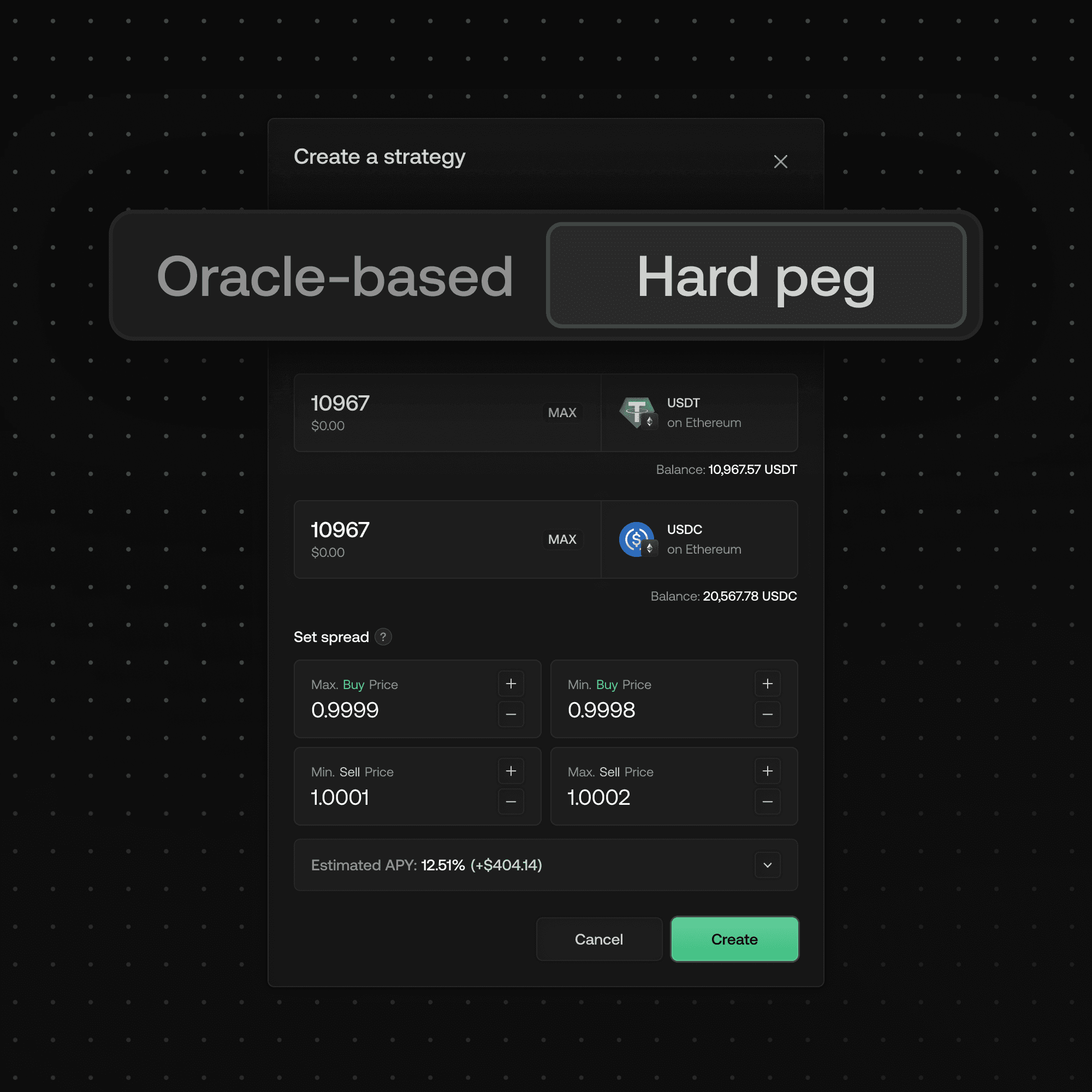
Oracle-based stablecoin strategies
An oracle-based stablecoin strategy keeps your liquidity centered around the current oracle price rather than a fixed peg. It dynamically adjusts the midpoint to reflect market conditions, which improves capital efficiency.
The difference shows up when you set your spread. Instead of entering fixed prices, you define each point, your min and max buy and sell prices, as a percentage deviation in ticks from the current oracle price. As the oracle price moves, your orders move with it, keeping your liquidity where the market actually is.
You can exit anytime, with no lockups.
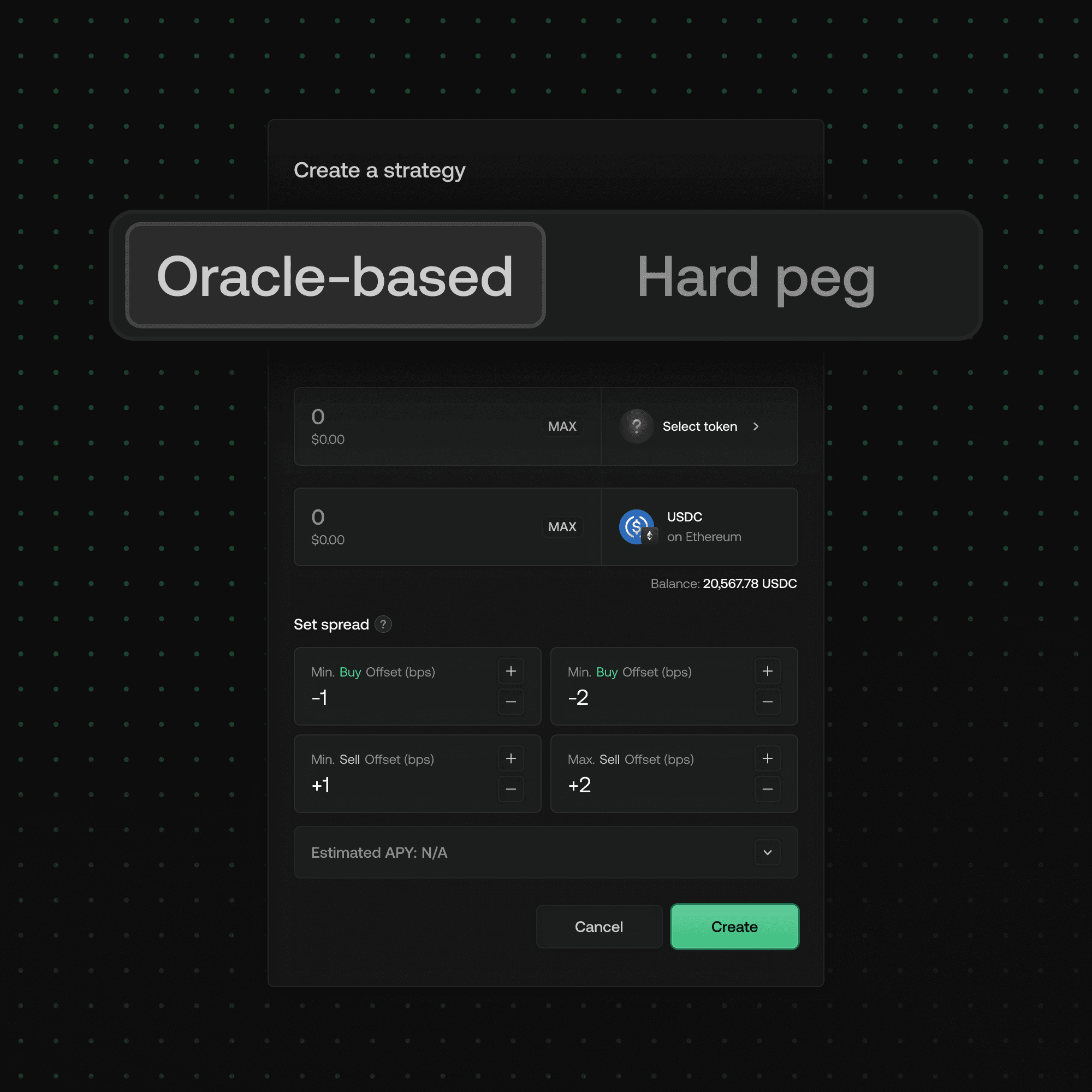
When to use which
A regular strategy is a clean way to earn yield around the dollar peg. An oracle-based strategy is built for capital efficiency, keeping your liquidity tightly centered on live market pricing as it shifts. Both run automatically once set.
Get started
Head to lp.chainflip.io/strategies
Open Create a strategy
Choose between regular and oracle-based strategy.
This is one of several features that went live with the v2.2 upgrade. To go deeper on how liquidity provision works on Chainflip, see the LP docs.
Resources
Swap Now - Start swapping native assets
Lend BTC - Borrow against native Bitcoin
Blog - Product updates and announcements
Chainflip Scan - Track swaps and network activity
Website - Explore Chainflip
Find us:

